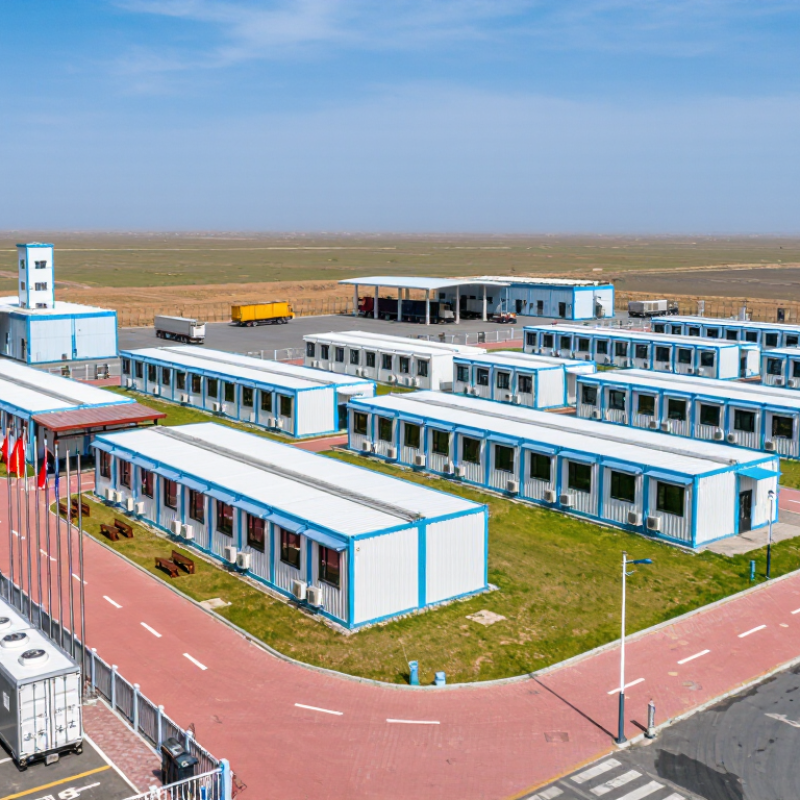
10 Best Container Camps for Sale Worldwide?

Container camps are becoming practical options for workforce housing, emergency accommodation, remote operations, and rapidly expanding projects. They use modified shipping containers, insulated modules, or hybrid systems. Yet the phrase “for sale worldwide” hides important differences. A camp built for a dry mining region may fail in a humid coastal climate. A low price can still be expensive.

Industry research supports this growing interest. Grand View Research identifies modular construction as a rapidly expanding global market, driven by shorter schedules, labor shortages, and controlled factory production. McKinsey’s research on modular construction also highlights potential cost and time savings, although results depend heavily on design standardization and supply-chain coordination. The United Nations Environment Programme’s Global Status Report for Buildings and Construction keeps energy use, material efficiency, and carbon emissions at the center of modern building decisions. These reports do not prove every supplier’s claims. They provide useful context.

This guide reviews 10 best container camps for sale worldwide through a practical, evidence-based lens. We consider layout efficiency, structural condition, insulation, ventilation, sanitation, fire protection, transport, installation, and after-sales support. International standards, local building codes, and site-specific engineering remain essential. A visually impressive camp may still have weak drainage or uncomfortable sleeping areas. Small details matter: sealed floors, shaded windows, accessible washrooms, and reliable power systems can shape daily experience. No shortlist is flawless. Buyers should request drawings, material specifications, warranty terms, certifications, and recent project references before signing. The strongest container camps combine speed with safety, comfort, durability, and transparent documentation.

10 Best Container Camps for Sale Worldwide?

What Are Container Camps and How Are They Used?

Container camps are groups of prefabricated steel modules arranged for temporary or semi-permanent accommodation. Each module can hold sleeping rooms, offices, kitchens, washrooms, clinics, or storage. They are usually made from reused shipping containers or purpose-built steel units. Their value is speed. A crane, prepared foundation, and utility connections can create a functioning site within weeks. Uses range from disaster response to remote construction, mining, healthcare, education, and seasonal workforce housing. UNHCR’s Global Trends 2024 reported 123.2 million forcibly displaced people worldwide at the end of 2024. That pressure explains demand for rapidly deployable shelter, but a container alone is not a complete camp.

A responsible layout needs drainage, fire separation, shaded walkways, waste systems, water treatment, and safe electrical distribution. The Sphere Handbook sets 3.5 square metres of covered living space per person as a common humanitarian minimum. Designers must also test heat, humidity, winter cold, noise, and accessibility before purchase. Steel transfers heat quickly. Without insulation and ventilation, interiors can become oppressive, especially under direct sun. The International Energy Agency’s Buildings report states that buildings use about 30% of global final energy consumption. This makes passive cooling, efficient lighting, and properly sized equipment practical concerns, not decorative extras.

Buyers should request structural records, corrosion checks, fire ratings, lifting points, and a clear installation plan. They should verify local planning, sanitation, occupational safety, and accessibility requirements with qualified professionals. A cheap unit can become expensive after transport, foundations, plumbing, and climate control. This is where many sales comparisons feel incomplete. Container camps work best when treated as infrastructure, not stacked boxes. Their flexibility is real, but so are the compromises.

10 Best Container Camps for Sale Worldwide? — What Are Container Camps and How Are They Used?

Container camps are modular facilities assembled from prefabricated shipping-container units. They are commonly used for worker accommodation, site offices, kitchens, dining areas, classrooms, storage, and sanitation facilities. The chart compares the external floor area of common ISO container modules used in camp planning.

Note: External floor area is calculated from standard nominal container dimensions. Usable interior space is smaller because of insulation, wall thickness, doors, plumbing, electrical systems, and furniture.

Key Features to Examine in a Container Camp

10 Best Container Camps for Sale Worldwide?

When comparing container camps, inspect function before appearance. The International Energy Agency reported that buildings and construction produced about 37% of global energy-related emissions in 2022. This makes insulation, shading, and efficient equipment practical priorities. Examine wall panels, roof insulation, window seals, and thermal bridges around steel frames. A cold metal floor can quickly expose weak specifications.

Ventilation deserves equal attention. Count fresh-air inlets, exhaust fans, filters, and maintenance access. Crowded sleeping rooms need reliable air movement, especially in humid or dusty locations. Check electrical protection, emergency lighting, smoke detection, and clearly marked escape routes. Ask for fire-test records and structural calculations, not only attractive drawings. ISO 45001 principles also support documented hazard controls, worker training, and incident review. Small omissions become expensive later.

Water systems reveal construction quality. Review tank capacity, drainage gradients, hot-water recovery, wastewater treatment, and cleaning access. The United Nations Environment Programme has repeatedly identified buildings as a major source of global energy demand, so efficient water heating can reduce operating pressure. Inspect doors, hinges, seals, and floor joints in person when possible. Photographs hide uneven floors. They also hide corrosion.

A proper supplier should provide material certificates, load data, inspection records, and a replacement-parts plan. Yet specifications can still fail on site. Local climate, transport limits, and user habits matter. Test one occupied module before ordering hundreds. That step costs time, but assumptions cost more.
How to Compare the Best Container Camps Worldwide

Comparing the Best Container Camps Worldwide

A strong comparison begins with the camp’s purpose, not its appearance. Workforce housing, emergency accommodation, and remote-site offices need different layouts. Check sleeping capacity, shared facilities, privacy, and circulation space. A practical camp should separate kitchens, washrooms, storage, and work areas. Ask for floor plans, material specifications, and recent project photos. Photos can hide flaws.

Climate performance deserves close attention. In hot regions, inspect insulation, roof ventilation, shading, and cooling loads. In cold regions, review thermal bridges, heating systems, door seals, and pipe protection. Coastal sites require corrosion-resistant finishes and disciplined maintenance. I would also compare fire detection, emergency exits, electrical protection, and accessibility. These details often matter more than decorative interiors. Local certification and installation rules should be verified by qualified professionals before purchase.

Compare the full cost over the camp’s expected service life. Include transport, foundations, assembly, utilities, inspections, repairs, relocation, and removal. A cheap unit may become expensive after repeated maintenance. Ask how spare parts are sourced and how quickly technicians can respond. Supplier references from similar climates provide useful evidence, but they are not perfect proof. I would score each option against the same checklist and record every assumption. That process feels slower. It usually prevents costly surprises. Still, no comparison is complete without visiting a finished camp, speaking with users, and checking performance during difficult weather.

10 Best Container Camps for Sale Worldwide? — How to Compare the Best Container Camps Worldwide
Rank Container Camp Type Typical Region Best Application Typical Capacity Standard Module Size Climate Adaptation Typical Turnkey Cost* Estimated Deployment Time Key Evaluation Advantage
1 Desert Workforce Camp Gulf region and North Africa Construction crews, energy projects and remote industrial sites 100–1,000 residents 20 ft or 40 ft ISO container modules High-reflectance roof, insulated walls, shaded walkways, air conditioning and dust sealing US$8,000–18,000 per person 4–9 months Strong heat protection, scalable accommodation blocks and efficient centralized utilities
2 Tropical Modular Camp Southeast Asia and island regions Infrastructure projects, plantations and emergency accommodation 50–500 residents 20 ft accommodation modules with covered external circulation Raised foundations, corrosion-resistant finishes, cross-ventilation, rainwater control and mold-resistant interiors US$7,000–16,000 per person 3–8 months Good ventilation and drainage performance in hot, humid and high-rainfall conditions
3 Savanna Operations Camp East and West Africa Mining, road construction, telecommunications and humanitarian operations 40–400 residents 20 ft living units with separate kitchen, dining and sanitation modules Solar shading, elevated floors, insect screens, backup generators and water-treatment systems US$8,000–20,000 per person 4–10 months Adaptable utility package for locations with limited grid power and water infrastructure
4 Cold-Climate Research Camp Northern Europe, northern Asia and high-altitude regions Scientific research, mining exploration and seasonal field operations 20–200 residents 20 ft or 40 ft insulated modules with enclosed service connections High-performance insulation, frost protection, heated plumbing, snow-load engineering and vestibule entrances US$15,000–35,000 per person 6–12 months Reduced heat loss and reliable operation in freezing temperatures and heavy snow
5 European Construction Camp Western, Central and Northern Europe Urban redevelopment, rail projects and major civil engineering works 30–300 residents 20 ft accommodation modules, often arranged in two-storey configurations High insulation values, fire-rated assemblies, acoustic control and energy-efficient heating US$12,000–28,000 per person 3–8 months Strong compliance potential for safety, energy efficiency, accessibility and worker welfare
6 North American Remote Camp Canada, Alaska and the United States Pipeline, utility, forestry and remote construction projects 50–600 residents 40 ft modules for bedrooms, kitchens, offices and recreation areas Cold-weather insulation, snow-load design, fire protection, robust HVAC and backup power US$15,000–32,000 per person 5–12 months High durability, comfortable living standards and strong logistics planning for remote locations
7 Latin American Project Camp South America, Central America and the Caribbean Mining, renewable-energy construction and disaster-response housing 50–800 residents 20 ft accommodation units with modular dining and sanitation blocks Seismic anchoring where required, corrosion protection, rainwater drainage and adaptable ventilation US$7,000–18,000 per person 4–9 months Flexible configuration for coastal, mountainous, tropical and semi-arid environments
8 Central Asian Industrial Camp Kazakhstan, Mongolia and neighboring inland regions Mining, energy exploration and transport infrastructure projects 40–500 residents 20 ft or 40 ft modules with linked corridors and service containers Insulated envelopes, heated floors or pipes, dust control and dual-season HVAC systems US$10,000–25,000 per person 5–11 months Performs well where sites experience large temperature changes, wind and long supply routes
9 Australian and Pacific Camp Australia, New Zealand and Pacific islands Mining, renewable-energy projects, marine works and emergency response 30–400 residents 20 ft modules with cyclone-resistant connections where applicable Wind-resistant anchoring, corrosion protection, solar-ready electrical systems and rainwater storage US$12,000–30,000 per person 4–10 months Suitable for isolated sites requiring robust transportability and independent utilities
10 Rapid-Deployment Relief Camp Worldwide disaster and emergency zones Temporary housing, medical support, logistics and public-service operations 20–300 residents 20 ft flat-pack or converted container modules Quick-connect utilities, washable finishes, elevated floors and simplified sanitation systems US$4,000–12,000 per person 1–4 months Fastest installation and easy relocation when speed is more important than long-term customization
*Indicative turnkey ranges include typical accommodation modules, basic utility systems, internal fit-out and installation planning. Actual prices vary according to transport distance, site preparation, labor, permits, foundation requirements, utilities, local safety codes, exchange rates and project duration.

Essential Factors Before Buying a Container Camp

When comparing the 10 best container camps for sale worldwide, price is only an opening figure. Ask what the quoted price includes. A camp may exclude foundations, transport, cranes, utility connections, or installation. Request a line-item quotation and delivery schedule.

Check the container’s original condition, steel thickness, corrosion treatment, and modification history. Fresh paint can hide rust. It happens.

Visit a completed project, if possible, and inspect sleeping rooms, kitchens, washrooms, offices, and medical spaces in use. Stand inside during rain. Listen for water entering roof joints.

Measure ventilation, daylight, thermal insulation, and noise. Review fire detection, emergency exits, electrical protection, plumbing, and wastewater arrangements with a qualified local professional. Confirm that drawings match the supplied units. They often do not.

Ask for material certificates, structural calculations, test records, warranties, maintenance instructions, and spare-part availability.

Location changes the design. Desert heat, coastal salt, freezing nights, and unstable ground require different foundations and equipment. Verify local planning, fire, sanitation, labor, accessibility, and transport requirements before signing.

Include inspection rights, acceptance tests, delay remedies, and clear responsibility for defects. I prefer simple layouts with replaceable components, although I have underestimated maintenance access before.

A narrow service corridor may save space today and create costly repairs later. Calculate ownership costs for energy, cleaning, inspections, relocation, and compliant disposal.

Cheapest is rarely predictable.

Where to Find Reliable Container Camps for Sale

Reliable container camps for sale are usually found through established modular-building manufacturers, certified container resellers, and specialized construction-equipment marketplaces. Look for suppliers with verifiable project records, factory inspection access, and clear after-sales support. The unit should have documented steel grades, insulation performance, fire-safety specifications, and electrical testing records. ISO 668 dimensions help confirm container compatibility, while CSC-related inspection records can reveal structural problems before purchase.

Location matters as much as the supplier. The UNCTAD Review of Maritime Transport reports that ships carry over 80% of global merchandise trade by volume. Therefore, nearby ports and established freight routes can reduce delivery uncertainty. The World Bank’s 2023 Logistics Performance Index gathered 4,090 assessments across 139 countries. Its data can help buyers compare customs reliability, infrastructure, and shipment tracking conditions. A supplier in a slightly higher-cost region may still offer better control.

Ask for recent installation photographs, maintenance logs, wind-load calculations, and a complete bill of materials. Visit one operating camp if possible. Check doors, floor joints, drainage, ventilation, and sleeping-room temperatures during inspection. Cheap units often hide expensive repairs. I have seen impressive renderings fail against muddy sites and weak foundations. That lesson is easy to overlook. Buyers should also confirm local planning, sanitation, accessibility, and worker-welfare requirements before signing. A written warranty matters, but independent inspection matters more.

Contact Us