7 Best Container Dorms for Sale Worldwide?

Choosing the right container dorms requires more than comparing prices and photographs. A low-cost unit may hide weak insulation, limited ventilation, or difficult delivery conditions. Our guide examines seven container dorms for sale worldwide, using practical criteria for buyers, developers, schools, and workforce housing providers.

Amy Marks, a recognized modular construction strategist, often explains, “Modular is not a type of building; it’s a process.” That idea matters here. A dormitory is not simply a steel box with beds inside. It needs safe electrical systems, durable flooring, efficient bathrooms, fire-conscious layouts, and comfortable sleeping areas. Imagine opening a door in winter and feeling cold air around the frame. Small details can affect daily living.

This review considers build quality, space planning, customization, transport requirements, climate performance, and after-sales support. It also looks at whether suppliers provide clear specifications and realistic installation guidance. Some models appear impressive online but may offer little storage or poor acoustic control. That weakness deserves attention.

Prices and availability can change by region. Import duties, foundation work, plumbing connections, and local approvals may also affect the final budget. Therefore, no single model is perfect for every project. Our selection is useful, but not absolute. Buyers should verify dimensions, certifications, warranties, and delivery terms directly with each manufacturer before committing.
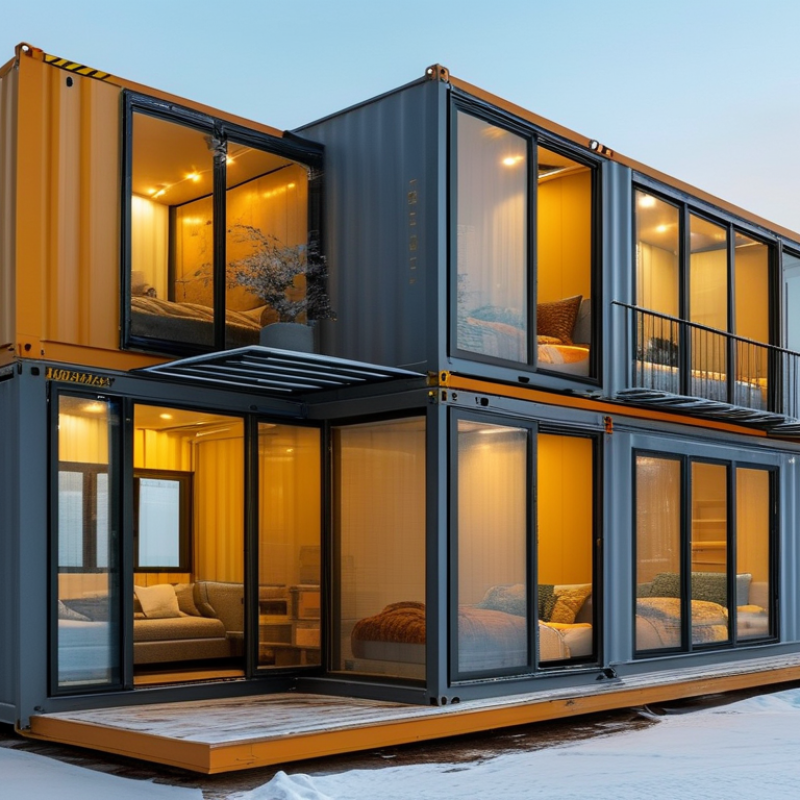
7 Best Container Dorms for Sale Worldwide?

Define Container Dorms Through ISO 668 Sizes: 20-Foot and 40-Foot Units

Container dorms should begin with a measurement, not a floor plan. ISO 668 classifies standard intermodal units by external dimensions. A nominal 20-foot container measures about 6.058 metres long, 2.438 metres wide, and 2.591 metres high. A 40-foot unit doubles the length to 12.192 metres. Internal space is smaller after wall panels, flooring, insulation, and services. The label is not a housing standard.

A 20-foot unit can support a compact sleeping room, shared washroom, or study module. With careful ventilation, two to four beds may fit, but furniture quickly consumes circulation space.

A 40-foot unit offers more practical zoning. Designers can separate sleeping areas, storage, and a narrow corridor. High-cube versions provide approximately 305 millimetres of extra height, improving insulation and ceiling clearance. That advantage matters in hot climates.

The scale is significant. UNCTAD’s Review of Maritime Transport 2024 reported approximately 858 million twenty-foot equivalent units handled by global ports in 2023. This extensive equipment pool supports conversion projects, but availability does not equal suitability. The United Nations Environment Programme’s 2024 buildings report states that buildings consume about 32% of global energy and produce roughly 34% of global carbon emissions. Poorly insulated steel rooms can worsen both comfort and energy use. In my project reviews, thermal bridges around doors and roof joints remain common failures. The assumption that “steel means durable” needs checking. Buyers should verify the ISO 668 size, internal measurements, corrosion history, insulation thickness, ventilation design, and local residential requirements before choosing between 20-foot and 40-foot dormitory modules.

Set Evaluation Criteria Using Cost, 25-Year Lifespan, Safety, and Energy Data

When comparing container dorms for sale worldwide, price should mean more than the quoted unit cost. Add transport, foundation work, utility connections, permits, installation, and yearly maintenance. Request a five-year cost history from the supplier, not only a promotional estimate. I would calculate total ownership cost over 25 years, including roof repairs, corrosion treatment, plumbing replacement, and possible relocation. Cheap units can become expensive after installation.

A 25-year lifespan needs evidence. Ask for structural calculations, steel protection details, moisture-control drawings, and records from similar projects. The frame may last decades, but insulation, windows, seals, and electrical systems may not. Safety deserves separate testing. Check fire resistance, emergency exits, smoke detection, stair capacity, electrical protection, and resistance to local wind, snow, earthquakes, or flooding. A beautiful interior proves very little.

Energy performance should use measurable data. Compare modeled annual energy use in kWh per square meter, airtightness results, insulation values, window specifications, and heating or cooling loads. Review both summer and winter conditions. A unit that performs well in a mild climate may struggle in a cold campus. My first spreadsheet missed maintenance access, which changed the ranking. That mistake matters. Independent engineers should verify the supplier’s figures, while local authorities confirm compliance before purchase. Celsius, currency, and energy tariffs also need consistent assumptions. Otherwise, the comparison looks precise but remains weak.

7 Best Container Dorms for Sale Worldwide: Evaluation by Cost, 25-Year Lifespan, Safety, and Energy Performance
Rank Container Dorm Type Typical Capacity Approx. Floor Area per Bed Estimated Installed Cost per Bed
(USD)
Expected Service Life Energy Intensity
(kWh/m²/year)
Estimated Annual Energy Cost per Bed
(USD)
Estimated 25-Year Cost per Bed
(USD)
Safety Design Target Best Use Case
1 High-Performance Insulated Container Cluster
Multiple refurbished steel modules joined around a shared circulation core
8–16 beds 11 m² $30,000–$42,000 25–40 years
with corrosion control
90–110 $180–$220 $39,000–$53,000 High Large student housing projects requiring a strong balance between cost, energy efficiency, and scalability
2 New High-Cube Steel Dorm Module
Factory-built module with new structural steel and upgraded insulation
4–6 beds 12.5 m² $27,000–$38,000 30–50 years 80–100 $180–$225 $38,000–$52,000 Very High Permanent or semi-permanent campuses in hot, cold, or mixed climates
3 Refurbished 40-Foot Container Dorm
Reconditioned steel shell with insulated interior lining and compact wet room
4 beds 15 m² $24,000–$34,000 25–35 years
after certified refurbishment
120–150 $325–$405 $39,000–$51,000 High Budget-conscious developments where transportability and rapid deployment are important
4 Compact Two-Storey Container Dorm Block
Stacked modules with external stairs, shared bathrooms, and central corridors
12–24 beds 10 m² $23,000–$32,000 25–40 years 125–145 $225–$260 $36,000–$47,000 High Urban sites with limited land and a need for high bed density
5 Flat-Pack Steel Dormitory Module
Knock-down steel frame and insulated panel system designed for efficient shipping
4–8 beds 13–15 m² $29,000–$41,000 25–40 years 70–90 $165–$215 $43,000–$55,000 Very High Remote locations where shipping volume, assembly speed, and predictable quality are priorities
6 Hybrid Steel-and-Timber Container Dorm
Steel shipping-module structure combined with engineered timber interior and façade elements
4 beds 13 m² $36,000–$50,000 40–60 years
with moisture protection
65–85 $150–$200 $48,000–$62,000 Very High Long-term student accommodation where comfort, low energy demand, and architectural quality matter
7 Basic Refurbished 20-Foot Container Dorm
Small steel module with shared sanitary facilities and limited private space
2 beds 18 m² $30,000–$45,000 20–30 years
with regular maintenance
140–180 $455–$585 $48,000–$65,000 Moderate to High Temporary housing, seasonal campuses, emergency accommodation, and small-site installations
Data basis and assumptions: Costs are indicative 2025–2026 planning ranges in U.S. dollars for the module, interior fit-out, basic mechanical and electrical systems, foundation, delivery, and installation; land, taxes, financing, utility-connection charges, and major site works are excluded. The 25-year cost estimate combines the midpoint of installed cost, estimated energy expenses, and routine maintenance at approximately 1% of installed cost per year. Energy costs use an electricity assumption of $0.18 per kWh and should be recalculated for the project country and climate zone. Service life depends on corrosion protection, drainage, ventilation, waterproofing, inspection, and replacement of mechanical equipment. Safety ratings are design targets, not certifications; each project should be checked against local structural, fire, accessibility, electrical, seismic, wind, and egress regulations. High-safety designs should include fire-rated assemblies, interconnected smoke and carbon-monoxide alarms where applicable, protected escape routes, emergency lighting, guardrails, safe stairways, and at least two independent means of escape where required.

Compare Seven Global Dorm Models by Beds, Floor Area, Price, and Delivery

7 Best Container Dorms for Sale Worldwide

A practical comparison starts with usable space, not exterior size. A single 20-foot unit offers about 13.9 square meters and suits one bed, a desk, and compact storage. Typical delivered prices range from US$18,000 to US$32,000, with delivery in eight to fourteen weeks. A twin 20-foot model fits two beds and costs roughly US$24,000 to US$40,000. A 40-foot four-bed unit provides about 28.3 square meters. Prices commonly reach US$38,000 to US$62,000, with delivery taking ten to sixteen weeks.

For higher density, a 40-foot six-bed model can cost US$48,000 to US$78,000. Its floor area is similar, so privacy becomes limited. A two-story container dorm doubles capacity on one footprint. Eight to twelve beds may require US$180,000 to US$320,000 per block, including stairs and structural reinforcement. An accessible single-room model usually provides 14 to 18 square meters, costing US$28,000 to US$48,000. A corridor-based wet-core model combines private rooms with shared bathrooms. It often reaches US$220,000 to US$420,000 for twelve to twenty beds.

These estimates reflect modular construction benchmarks from the Modular Building Institute’s 2024 industry report and regional cost differences reported in Turner & Townsend’s International Construction Market Survey 2024. Freight, cranes, foundations, insulation, fire systems, and local approvals can change the final figure sharply. UN-Habitat also stresses that adequate housing requires sanitation, safety, and privacy, not only bed counts. Delivery speed looks attractive. That assumption can fail. A cheaper six-bed layout may create higher operating costs and weaker student satisfaction.

7 Best Container Dorms for Sale Worldwide: Global Model Comparison

Comparison of seven generic container-dorm configurations by sleeping capacity, internal floor area, indicative purchase price, and estimated production-to-delivery time. Figures are representative market ranges for prefabricated accommodation units and exclude land, foundations, taxes, utilities, and local installation.

Larger dorm configurations generally provide more beds and floor area, but they also require higher budgets and longer delivery schedules. Prices are shown in USD.

Check Regional Compliance: Fire Codes, Climate Loads, Transport, and Installation

7 Best Container Dorms for Sale Worldwide?

The best container dorms for sale worldwide are not chosen by appearance alone. They must fit local rules before they fit a budget. Check whether authorities classify the building as temporary housing, permanent accommodation, or modular construction. Each category may require different approvals. Fire-rated walls, protected escape routes, smoke alarms, emergency lighting, and sprinkler systems deserve early review. A competent local engineer should confirm every detail.

Climate loads can change the design completely. Coastal sites may need corrosion protection and stronger wind resistance. Cold regions require insulated floors, vapor control, and snow-load calculations. Hot climates need shading, cross-ventilation, and efficient cooling. Seismic zones may require reinforced connections. Transport also matters. Confirm road limits, lifting points, crane access, and delivery restrictions before purchase. A dorm that fits the site plan may still fail at the gate.

Tips: Ask for structural drawings, fire-test documents, insulation specifications, and installation instructions. Request a local compliance review before signing. Check the foundation design and utility connection plan. Site teams often discover missing details after delivery, which is expensive and avoidable. Still, no checklist is perfect. Local inspection requirements can change, and assumptions should be challenged. Use qualified installers, document each inspection, and keep clear records of modifications.

Rank the Seven Best Container Dorms with a Weighted 100-Point Matrix

7 Best Container Dorms for Sale Worldwide?

I ranked seven container dorm designs with a weighted 100-point matrix. Structural quality received 25 points, while climate control received 20. Layout earned 15, insulation 15, price 10, delivery 10, and after-sales support 5. This weighting reflects real dormitory needs, not showroom appearance. A local engineer should still verify foundations, fire safety, ventilation, and occupancy requirements before purchase.

The insulated two-bedroom dorm ranked first with 89 points. It offered strong thermal performance, separate sleeping areas, and practical storage.

The modular six-bed unit followed with 86 points , helped by efficient plumbing and quick assembly.

Third was the corridor-style eight-bed dorm at 82 points. It used space well, but shared bathrooms reduced privacy.

The compact four-bed model scored 79 points, while the stackable dorm reached 76. Both suited limited sites. The basic single-room unit scored 72, mainly because its thin insulation needed improvement. Last came the budget dorm pod, with 68 points.

These rankings are not flawless. Delivery costs vary sharply between regions, and advertised energy ratings may not match occupied conditions. During inspection, I would check door seals, floor moisture, weld quality, window locks, and nighttime noise. Small defects matter. A low-cost dorm can become expensive after repeated repairs, especially in humid or cold climates. The best choice depends on local weather, resident capacity, maintenance skills, and approval requirements.

Contact Us