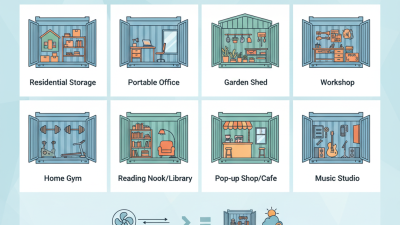
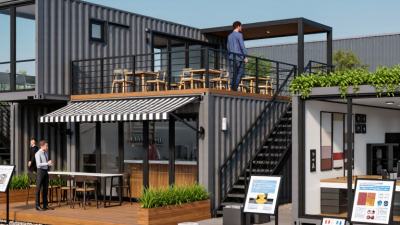
An 8 x 12 container offers a practical middle ground between compact storage and a larger modular building. Its dimensions provide roughly 96 square feet of usable floor space, depending on the container design and wall thickness. That area can hold garden equipment, boxed inventory, bicycles, tools, or seasonal furniture without requiring a permanent structure. It can also serve as a small workshop, site office, retail kiosk, or organized archive room.
Think beyond simple storage.
The best use depends on access, ventilation, flooring, security, and local site conditions. A standard steel container protects contents from rain and handling damage, but it may become extremely hot in direct sunlight. Insulation, vents, lighting, and a raised foundation can improve daily comfort and protect sensitive materials. Double doors may simplify loading, while shelving can turn unused vertical space into valuable storage. However, internal measurements vary, so every plan should begin with accurate dimensions and a clear inventory.
That detail matters.
From a practical perspective, an 8 x 12 container works well when space is limited but organization still matters. It can reduce clutter at a home, farm, construction site, or small business. Yet it is not automatically the right choice for every project. Delivery access, ground preparation, weight limits, and permitting requirements may affect the final decision. A careful assessment prevents expensive surprises and helps the container perform safely for years.
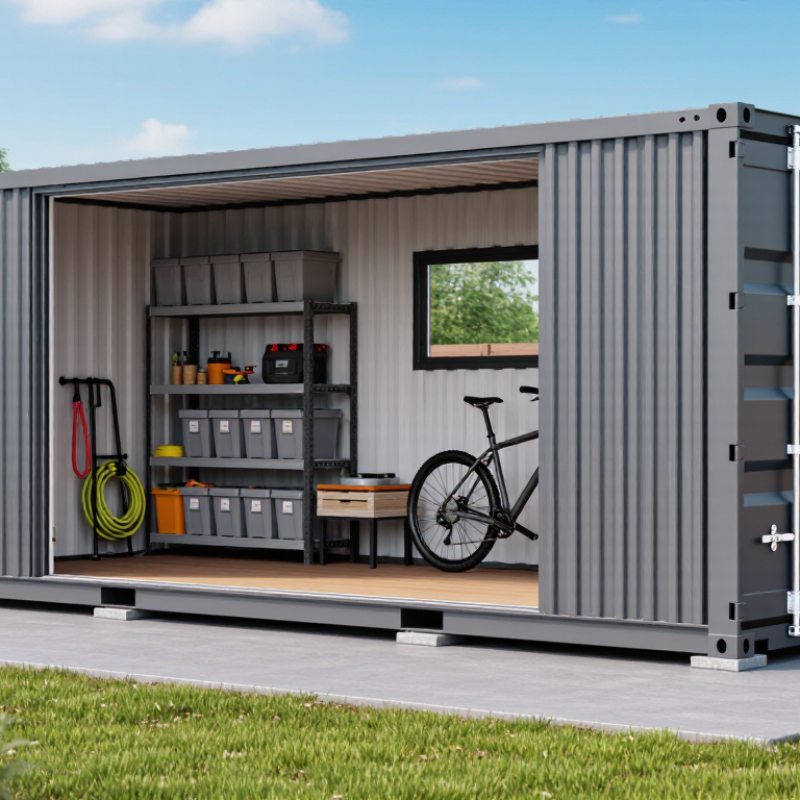
An 8 x 12 container provides a 96-square-foot floor area, making it useful for compact storage, workshop tasks, or seasonal equipment. Its footprint measures 8 feet wide by 12 feet long. That is about the size of a small bedroom.
The interior space is usually smaller than the stated dimensions. Wall thickness, doors, and framing reduce usable clearance. A careful layout might fit shelving along one long wall, leaving a walkway near the center. For example, bicycles, lawn tools, boxed materials, and small furniture can share the space when stored vertically. Heavy items should stay low and near the floor to improve stability.
Measure every item before delivery. A tall cabinet may fit on paper but fail near the door opening. Ventilation also matters, especially when temperature changes create condensation. The container should sit on a firm, level base, such as concrete blocks or a prepared gravel pad. Check local placement rules before installation, because property access and setback requirements vary. My first layout would probably waste space without labeled bins and a simple floor plan. Even 96 square feet becomes crowded quickly when equipment lacks a fixed location.
What Is an 8 x 12 Container Used For?
An 8 x 12 container offers about 96 square feet of floor space. Its practical interior volume usually falls between 500 and 600 cubic feet. The exact figure depends on wall thickness, roof height, insulation, and door hardware. An 8 x 12 label describes the nominal footprint, not guaranteed internal dimensions.
That capacity suits household furniture, seasonal equipment, boxed inventory, and small business supplies. A typical load might include a sofa, mattress, dining table, shelving units, and 40 to 60 medium boxes. Keep heavier items low and near the walls. Leave a narrow access path if regular retrieval matters. Otherwise, usable capacity drops quickly.
The 2024 Self Storage Association Demand Study reported that 14.5 million U.S. households rented self-storage in 2023. This demand explains why compact storage planning matters. ISO 668:2020 also shows why stated dimensions need checking, because container measurements distinguish nominal and internal sizes. I would not plan around 600 cubic feet blindly. A 10 percent clearance allowance is safer for irregular furniture and protective packaging. That estimate is imperfect. Door openings often become the real constraint. Measure before loading.
An 8 x 12 container offers a practical storage footprint for many small and mid-sized operations. Its exact usable space depends on wall thickness, door placement, and ceiling height. Measure your largest items before booking one.
On construction sites, it can hold power tools, fasteners, safety equipment, ladders, and boxed materials. Shelving keeps smaller supplies visible and reduces time spent searching. Heavy items should stay low and near the center. This reduces shifting during relocation. A lockable container also protects equipment from weather and casual access, although it is not a substitute for site security.
Retailers often use this size for seasonal stock, packaging materials, display fixtures, and overflow inventory. Clear labels and aisle space make stock checks easier. Leave room to open doors fully. Crowding creates hidden losses. Household movers may use an 8 x 12 container for furniture, appliances, cartons, and bicycles from a smaller home. Wrap wood surfaces, raise boxes from the floor, and avoid storing moisture-sensitive goods without protection.
Plan the loading sequence carefully. Items needed first should go near the doors. A common mistake is filling every corner, then discovering that one missing box sits behind everything else. I have seen poor layouts waste more space than insufficient container size. Recheck measurements, weight distribution, ventilation needs, and access rules before delivery. Practical planning is rarely perfect, but a simple sketch can prevent expensive rearranging.
What Is an 8 x 12 Container Used For?
An 8 x 12 container can support tools, equipment, seasonal inventory, or a compact workshop. Its practical use depends on load planning, not just interior volume. The container’s identification plate should show tare weight, maximum gross mass, and allowable payload. ISO 1496-1 establishes structural and testing requirements for freight containers, but an 8 x 12 unit may be modified or storage-grade. Do not assume ISO capacity applies.
Measure the load before loading. A dense machine can exceed the floor rating while the total payload remains acceptable. Spread heavy items with steel plates or timber runners. Keep weight low and centered. According to the 2023 Container Census Report, global container fleets continue to include varied equipment types, making visual assumptions unreliable. That warning applies here. Small differences matter.
Check the floor rating and the actual condition of the boards, cross-members, and support points. A damaged floor changes the risk completely. Door clearance also needs verification. Measure width, height, threshold height, and swing space with the doors fully open. Leave extra clearance for packaging and turning equipment. Tight fit.
The “8 x 12” label describes footprint, not guaranteed internal dimensions. Recheck every measurement. A little planning can prevent a very expensive mistake.
An 8 x 12 container is often used for on-site storage, workshop space, equipment protection, or temporary inventory control. Its compact footprint fits behind a building or beside a construction area. The extra two feet of length can make shelving and tool access easier than in a standard storage box.
Its dimensions do not automatically make it an ISO container. An ISO 20-foot container usually follows international dimensional and structural standards, including common corner fittings and handling requirements. It is approximately 20 feet long, 8 feet wide, and 8 feet 6 inches high. An 8 x 12 unit is usually a domestic or custom-built design. Heights, door positions, floor strength, and lifting points can vary widely.
Check the plate.
A qualified inspector should verify the manufacturer’s data, maximum gross weight, floor loading, and lifting instructions. ISO units intended for international transport normally carry identification connected with applicable container safety rules. Many 8 x 12 units do not have the same certification, so they may be unsuitable for ship, rail, or crane handling. Forklift pockets can also be misleading; their presence does not prove structural approval.
For a storage project, an 8 x 12 unit may offer better space efficiency and easier placement. For repeated transport, an ISO 20-foot container provides more predictable compatibility with standard handling systems. Measuring only the outside dimensions is a common mistake. Door clearance, internal height, ventilation, and condensation control matter too. I would confirm those details before ordering, because a convenient unit can become awkward when loaded.
External dimensional comparison with a standard ISO 20-foot container. The 8 × 12 unit represents a typical nominal 8 ft wide, 12 ft long container with an 8 ft 6 in height; actual specifications may vary by manufacturer and local code.
An 8 × 12 container provides approximately 96 sq ft of external footprint and 816 cubic ft of nominal external volume. A standard ISO 20-foot container is approximately 160 sq ft externally and 1,360 cubic ft in nominal external volume. ISO compliance also requires standardized external dimensions, structural performance, handling features, and safety requirements; an 8 × 12 unit is not automatically ISO-compliant.