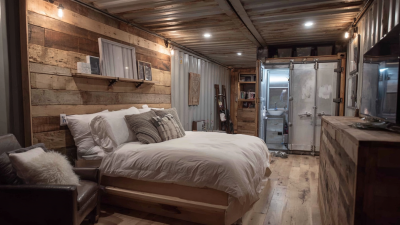
Choosing the best bedroom container starts with the space you actually have, not a polished product photo. Measure the shelf, bed clearance, and the items you plan to store. A fabric bin may suit spare blankets, while a lidded box can protect seasonal clothes from dust. Small details matter.
The Houzz 2024 U.S. Houzz & Home Study reported that 54% of surveyed homeowners renovated in 2023. Its median renovation spend was $24,000. The report does not measure bedroom-container purchases, so it cannot identify a “best” style. It does show why practical home decisions deserve careful planning. Check dimensions, materials, handles, ventilation, and whether the container slides easily beneath your bed.
Organizing consultant Marie Kondo offers a useful principle: “The question of what you want to own is actually the question of how you want to live your life.” Apply that idea before choosing a bedroom container. Do you need quick access to daily essentials, or hidden storage for items used once a season? A deep container may hold more, but it can make things harder to reach. A clear plastic lid helps identify contents; a soft-sided bin may fit a tight corner. There is no perfect choice. Even a tidy-looking container can become clutter if it does not suit your routine. In this guide, we’ll compare common types, materials, sizes, and features to help you choose with confidence.
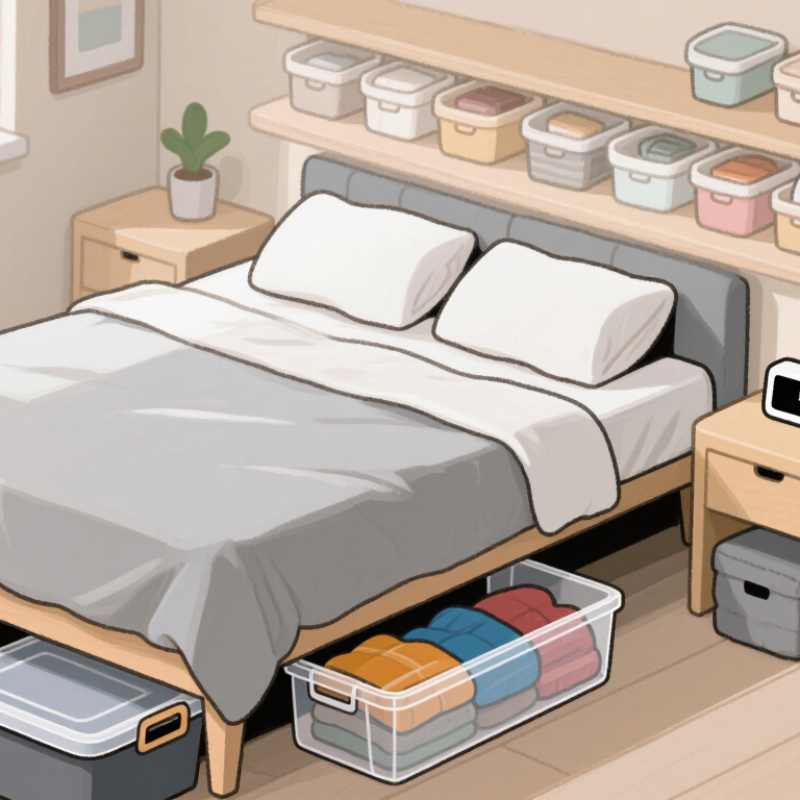
Start by listing what needs a home: folded sweaters, spare sheets, bedside cables, or small keepsakes. Then estimate each item’s size and how often you use it. Daily essentials belong within easy reach; seasonal clothes can go beneath the bed or on a high shelf. Measure the available space before shopping. Measure twice. A container that blocks a drawer or catches on a closet door quickly becomes frustrating.
Choose the container around its contents, not just its appearance. Fabric bins suit light clothing and can fold away when empty. Lidded, sturdy boxes help protect linens from dust. Shallow trays keep watches, chargers, and other small items from becoming a tangled pile. The National Sleep Foundation’s 2011 Bedroom Poll found that 75% of respondents considered a comfortable bedroom important for good sleep. That finding does not prove storage improves sleep, but it supports keeping the room comfortable and practical. It is easy to buy too many containers; I’d start with one category and adjust after seeing what actually fits.
Measure the spot before choosing a bedroom container. Check its width, depth, and height, then leave room for nearby doors, drawers, and walking paths. A container that fits on paper may block a closet door in real life. I once forgot to account for a bedside lamp; the lid barely opened. Small details matter.
Next, estimate what you plan to store. Measure bulky items such as spare blankets, or group smaller belongings in a laundry basket and note its dimensions. Compare those measurements with the container’s usable interior space, not just its outside size. Thick walls and rounded corners can reduce capacity. Think about access, too: a deep box may hold more, but everyday items can disappear at the bottom.
Tips: Use painter’s tape to mark the container’s footprint on the floor. Test drawers and doors while standing in the taped area. Leave a little extra clearance. Measurements can still be imperfect, so avoid buying a container that only fits under ideal conditions.
Compare each container’s estimated capacity with the space available in your bedroom. Capacities are calculated from the example external dimensions shown in the chart; actual usable capacity may be lower. Measure the intended location before choosing a container.
Choose containers by how you use the space. Under-bed boxes suit spare linens, but measure the frame clearance before buying; a lid that catches is frustrating. Open fabric cubes make daily clothing easy to reach, while lidded bins keep dust off seasonal items. Small drawers can hold socks and accessories without taking over a bedside table. Keep frequently used items at arm’s reach.
Material changes upkeep and environmental impact. Plastic is light and easy to wipe clean; woven fabric feels softer but can collect dust. Wood looks substantial, though it is heavier to move. The U.S. EPA’s 2018 Advancing Sustainable Materials Management report found that 8.7% of plastic and 68.2% of paper and paperboard in municipal solid waste were recycled. These figures cover broad waste categories, not bedroom containers specifically, but they make end-of-life worth considering. A matching set looks neat. It may still waste space. Check handles, smooth edges, and whether lids open fully beside a bed. Ventilated designs can help air circulate around stored textiles, while clear panels make contents easier to identify without unpacking everything.
A bedroom container should fit both the room and the routine. For socks or spare linens, a low drawer may be easier to reach than a deep box under the bed. Check whether the lid, handle, or pull remains usable when furniture is close by. Try opening it from your usual standing position. Small detail, big difference.
Durability depends on weight, movement, and material. Press gently on the base and inspect seams, hinges, and wheels before buying. A container holding folded blankets needs a stronger bottom than one holding scarves. Slide it across the floor if possible; rough edges can catch rugs or scratch delicate surfaces. I sometimes focus too much on appearance, then realize cleaning the corners matters more.
Safety deserves equal attention. Choose stable containers that will not tip when partly filled, and avoid stacking heavy items above shoulder height. Lids should stay open without dropping suddenly, especially near fingers. For a child’s room, skip loose cords and check that small parts cannot detach easily. Leave walking paths clear, and keep frequently used items at a comfortable height.
Choosing a bedroom container starts with the space it will occupy, not its advertised capacity. Measure the floor area, shelf opening, or gap beneath your bed. Measure twice. Remember to check clearance for handles and lids; a box that fits without its lid may not be useful.
Match the container to what you plan to store. Soft-sided fabric bins can suit spare blankets, while firm-sided containers may protect folded clothes from dust. For everyday items, choose a size you can lift comfortably when full. Small rooms punish guesswork. Leave enough room to open drawers and walk safely around the bed.
Set your budget after comparing the full cost, including lids or dividers if they are sold separately. A low-priced container can be poor value if it cracks, catches on a shelf, or wastes space. Still, expensive materials are not always necessary for light seasonal storage. A common mistake is buying several containers before testing one in the room. Try one first, load it with the items you actually own, and notice whether it slides, stacks, and opens as expected. My own planning would still leave a little room for error: bedrooms change, and storage needs do too.
| Container type | Typical dimensions (L × W × H) | Approx. budget (USD) | Best for | Room-fit considerations | Advantages and trade-offs |
|---|---|---|---|---|---|
| Under-bed plastic bin | 24–36 × 16–20 × 4–7 in | $10–$35 | Shoes, linens, seasonal clothing | Measure the clearance beneath the bed, including its support frame. | Protects contents from dust and is easy to wipe clean; rigid sides can limit what fits. |
| Fabric under-bed bag | 30–40 × 18–24 × 5–8 in | $8–$25 | Blankets, sweaters, spare bedding | Flexible sides can fit irregular spaces; check that the bag will slide out easily. | Lightweight and often foldable when empty; offers less structure and dust protection than a lidded hard bin. |
| Stackable lidded box | 16–24 × 12–18 × 10–15 in | $8–$30 each | Closet shelves, accessories, keepsakes | Check shelf depth and total stack height; leave room to remove the lid. | Uses vertical space and keeps items together; stacked boxes may be inconvenient to access often. |
| Small drawer unit | 12–18 × 16–24 × 24–36 in | $35–$120 | Folded clothes, socks, bedside items | Measure floor space and drawer-opening clearance, especially near doors or walkways. | Provides organized, easy-to-reach storage; costs more and takes up permanent floor space. |
| Fabric closet organizer | 10–14 × 10–14 × 30–60 in | $12–$40 | Sweaters, bags, folded garments | Check closet-rod height and width; hanging organizers need sufficient vertical clearance. | Adds shelves without furniture; fabric shelves may sag under heavy items. |
| Woven storage basket | 12–18 × 10–16 × 8–14 in | $15–$60 | Pillows, throws, laundry, everyday items | Choose a size that fits beside furniture without narrowing the walking path. | Keeps frequently used items accessible and can suit open-room storage; usually does not seal out dust. |
| Dimensions and prices are typical estimates for common container types in the U.S.; actual sizes and prices vary by material, capacity, and retailer. Measure your available space before buying. | |||||