
Top Acoustic Panel Manufacturers in China for Global Buyers

Choosing a supplier for Acoustic Panels in China takes more than comparing prices or browsing polished product photos. Global buyers need to understand how panels are made, tested, packed, and supported after shipment. A neat showroom sample helps, but it cannot tell the whole story.

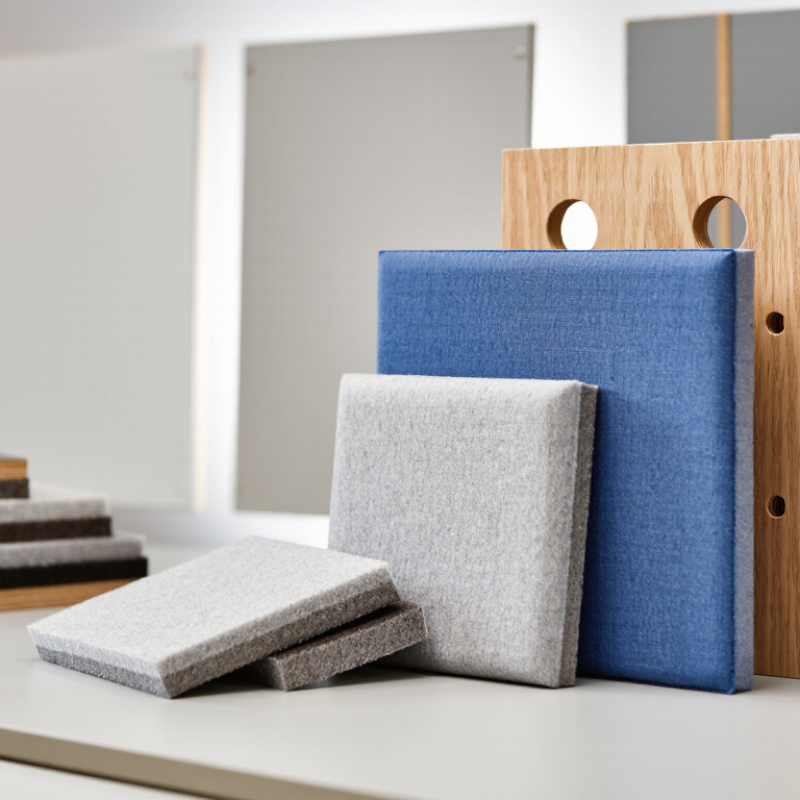
Acoustician Wallace Clement Sabine wrote, “The acoustical properties of a room depend upon its size and shape, and upon the materials of which its surfaces are composed.” That principle still matters. A felt panel, a fabric-wrapped fiberglass board, and a perforated wood panel can look similar in a catalogue, yet perform differently in a real room. Even the mounting gap can affect results. Small details matter.

This guide introduces leading Chinese manufacturers and the questions buyers can use to assess them. It looks at product range, customization, production capability, acoustic test data, material details, and export communication. Ask for reports tied to the exact product, not just a similar panel. Check sample finish, edge quality, packaging, and stated lead times. Also confirm that documentation suits the destination market and project brief. Acoustic Panels reduce reflections; they do not automatically soundproof a room. That distinction is easy to miss. No shortlist replaces careful verification, and supplier claims deserve a second look.
Top Acoustic Panel Manufacturers in China for Global Buyers

What Acoustic Panels Are and How They Work

Acoustic panels manage reflections, not sound transmission. Their porous cores let sound waves enter tiny air passages, where friction converts part of their energy into heat. Less reflected energy means less flutter echo and clearer speech. A hand clap in a bare meeting room often reveals the problem: a sharp ring returns from hard walls and glass. Panels help, but they cannot replace insulation when noise travels through a wall.

Performance depends on material, thickness, air gap, and frequency. ASTM C423 measures sound absorption in a reverberation room; its Noise Reduction Coefficient averages results at 250, 500, 1,000, and 2,000 Hz. One number can hide weak bass performance. That matters. The World Health Organization’s Guidelines for Community Noise (1999) gives 30 dB LAeq as a bedroom indoor guideline for sleep, but decorative panels alone cannot ensure that level. For global buyers, request test reports showing the tested panel’s size, mounting method, and frequency-by-frequency absorption. A thick panel spaced slightly off the wall may absorb more low-frequency sound than the same panel mounted flush. Still, room shape and furnishings complicate results. Specifications help, but the installed room is the real test.

China’s Acoustic Panel Manufacturing Landscape

China’s acoustic-panel landscape sits within a large, diverse building-materials industry. The National Bureau of Statistics reported that China’s construction output reached 31.6 trillion yuan in 2023, up 5.8% year on year. That scale supports broad supplier networks for mineral-fibre, polyester-fibre, wood-based, and perforated-metal panels. Factories may handle cutting, edge finishing, wrapping, and packing in one production flow. Yet capacity does not guarantee consistent acoustic performance. The picture is uneven.

For global buyers, specifications matter more than catalogue photos. Check the sound absorption coefficient and test frequency range, alongside panel thickness, density, and mounting method. A stated NRC value alone can hide differences across frequencies. Ask for a report from an accredited laboratory, and confirm that the tested assembly matches the proposed installation. The National Bureau of Statistics also recorded 5.0% growth in manufacturing value added in 2023, offering useful context for China’s industrial base, not a direct measure of acoustic-panel output. Supplier audits should therefore examine batch records, packaging, and production tolerances. Small details matter. A panel that arrives with crushed corners or inconsistent colour can undermine an otherwise sound specification.

How to Evaluate Acoustic Panel Manufacturers in China

When evaluating acoustic panel manufacturers in China, look beyond a polished catalogue. Ask for the panel’s core material, thickness, density, finish, and intended installation method. Small details matter. A 25-millimeter panel mounted with an air gap may perform differently from the same panel fixed directly to a wall.

Request acoustic test reports that identify the tested product and setup. Check whether the report lists a recognized laboratory, test method, and measured frequency range. A single performance rating cannot describe every room or installation. Ask for fire-safety documentation and material specifications relevant to your project, then confirm that they match the quoted product. Request a production sample, too. Compare its edges, finish, weight, and packaging with the written specification. A sample can look excellent and still tell you little about batch consistency; I have to remind myself of that.

Discuss quality control in practical terms: how often are dimensions checked, and what happens when a batch fails inspection? Ask for recent production photos or a video call from the workshop, while remembering that these do not replace independent verification. Clarify minimum order quantities, lead times, protective packing, replacement procedures, and who pays for damage in transit. Vague answers deserve a follow-up. Record agreed tolerances and material details in the purchase documents before production begins.

Leading Chinese Acoustic Panel Manufacturers for Global Buyers

Chinese acoustic panel manufacturers serve global buyers with PET-felt, fabric-wrapped, and perforated wood products. The strongest suppliers provide clear drawings, consistent dimensions, and test reports—not just attractive samples. Ask whether absorption results come from an independent laboratory and identify the tested thickness, mounting method, and frequency range. These details matter. A 25 mm panel may perform differently from a 50 mm panel, especially at lower frequencies.

The 2023 Global Status Report for Buildings and Construction, published by UNEP and GlobalABC, estimates that buildings and construction account for 34% of global energy demand and 37% of energy- and process-related carbon emissions. This does not measure acoustic panels’ impact, but it makes material sourcing and product lifespan relevant procurement questions. For sound control, compare laboratory absorption data under ISO 354 rather than relying on vague “soundproof” claims. The WHO’s 2018 Environmental Noise Guidelines recommend road-traffic exposure below 53 dB Lden; absorptive panels alone cannot achieve that outdoor-noise target. Buyers may need a broader façade and room-design solution.

Tips: Request a sample, test its finish, and check fire-test documentation for your project’s requirements. Confirm packaging dimensions and replacement availability, too. One easy oversight: color can vary between production batches.

Export, Certification, and Sourcing Considerations for International Buyers

For international buyers, export readiness should be checked alongside acoustic performance. Ask whether the manufacturer regularly ships to your destination and can prepare consistent packing lists, invoices, and product specifications. Small details matter. Confirm panel dimensions, thickness, finish, and carton labels before production, not after the goods reach the port. A sample can look perfect while a full batch varies in color or edge quality.

Certification depends on the destination and the product’s intended use. Request current test reports for acoustic absorption, fire performance, and, where relevant, indoor emissions. Check that each report names the tested product construction and mounting method; results may not transfer to a different panel. A familiar rating is not automatic approval. Verify requirements with your local project team or qualified compliance adviser, since building rules differ between markets.

Sourcing calls for practical checks. Ask for production lead times, minimum order quantities, payment terms, and procedures for handling defects. Compare quotes using the same panel size, core material, finish, and packaging. If possible, inspect a pre-shipment sample and review photographs of packed cartons. Freight can damage exposed corners, even when the panels themselves meet specification. Factory audits help, but they do not remove every risk. Documentation and follow-up still matter.

Example Acoustic Panel Performance for Global Buyers

Representative sound absorption coefficients for a 50 mm porous panel across octave-band frequencies. Values are illustrative, not a product claim; actual performance depends on panel construction, mounting, and test conditions.

When comparing export suppliers, request complete laboratory reports and confirm the test method, panel thickness, mounting configuration, and frequency data. ISO 354 and ASTM C423 are commonly used reverberation-room test methods; verify which requirements apply to your project and destination market.

Contact Us