
China Top 10 Aluminum Composite Panel Factory Suppliers

Choosing a reliable supplier requires more than comparing prices on a product page. This guide explores China’s top 10 Aluminum Composite Panel Factory suppliers through practical purchasing criteria. It considers manufacturing experience, product consistency, export capability, and communication quality. Each supplier deserves attention for different reasons, not only for production scale.

A dependable Aluminum Composite Panel Factory should provide clear specifications, stable core materials, and traceable quality inspections. Important details include panel thickness, aluminum skin gauge, coating type, fire rating, and surface finish. Factory visits, sample reviews, and production photographs can reveal details that brochures often hide. Ask for test reports from recognized laboratories. Confirm whether certificates match the actual product.

Small details matter.

The selection also considers equipment, customization capacity, packaging, delivery performance, and after-sales support. Some manufacturers may serve large construction projects, while others work better for signage, façades, or interior decoration. No supplier is perfect. Public information may be incomplete, and performance can change with raw material conditions or order volume. That limitation deserves honest mention.

Readers should contact shortlisted factories directly and request recent samples, technical data sheets, and commercial references. Compare the same specifications before judging quotations. A lower price may reflect a thinner aluminum layer or a different core composition. This introduction prepares buyers to evaluate suppliers with practical judgment, professional caution, and realistic expectations.
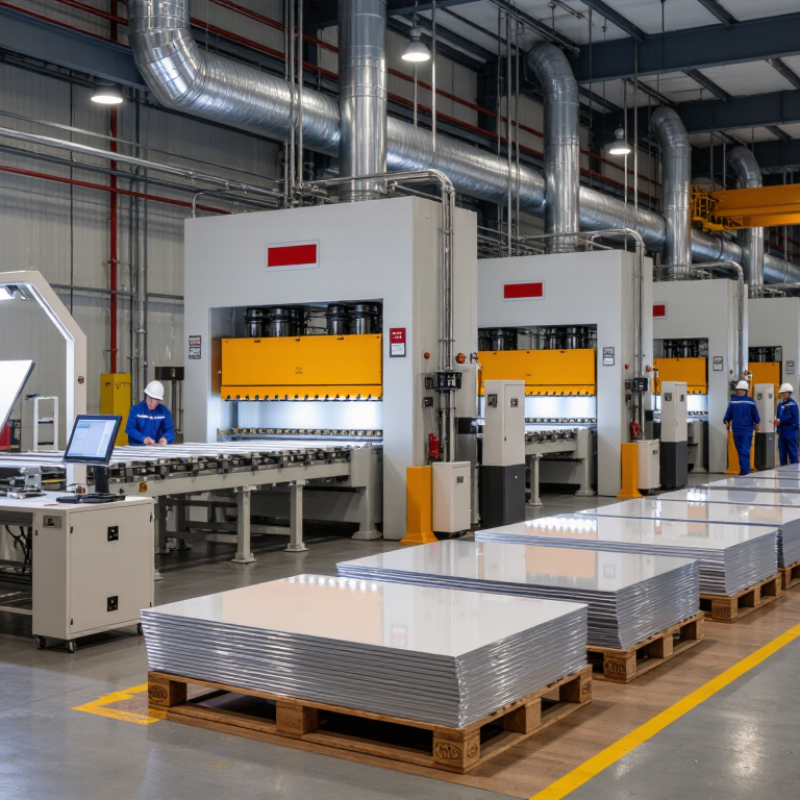
China Top 10 Aluminum Composite Panel Factory Suppliers

What Are Aluminum Composite Panels and Their Main Applications?

What Are Aluminum Composite Panels and Their Main Applications?

Aluminum composite panels are layered building boards. They usually combine two thin aluminum sheets with a polymer or mineral-filled core. This structure creates a flat, lightweight panel with useful stiffness. Grand View Research estimates that the global aluminum composite panels market was worth about US$6 billion in 2023. Its report also projects continued growth through 2030, supported by commercial construction and renovation demand.

Architects use these panels for exterior façades, curtain-wall accents, canopies, column covers, and retail signage. Indoors, they appear on partitions, ceilings, reception walls, and elevator surrounds. Their smooth surface supports crisp colors and clean joints. In transport projects, panels can reduce weight, but design limits still matter. A lighter envelope does not automatically deliver better energy performance. Insulation, ventilation, shading, and installation quality remain decisive. Fire performance also varies by core type and local building requirements. The 2023 UNEP Global Status Report for Buildings and Construction notes that buildings consume about 32% of global energy. Material selection deserves careful review.

Tips: Check the core classification, coating warranty, panel flatness, and fixing system before ordering. Request test documents, not only product brochures. Small gaps can become visible under strong sunlight. That detail is easy to underestimate. Always confirm local fire and wind-load requirements with a qualified professional.

Aluminum composite panels (ACPs) are lightweight, rigid panels made from two aluminum sheets bonded to a mineral-filled or polymer core. Typical panel thickness is commonly 3–4 mm, depending on the application. Exterior cladding and curtain wall systems generally use 4 mm panels, while signage and interior applications often use 3 mm panels. Actual specifications should comply with local building, fire-safety, and wind-load requirements.

How to Evaluate Aluminum Composite Panel Factory Suppliers in China

Evaluating aluminum composite panel factory suppliers in China requires more than comparing prices. A reliable supplier should explain its core material, aluminum thickness, coating system, and production tolerances clearly. Ask for recent test reports, quality certificates, and sample panels from the same production line. A sample may look excellent, but mass production can reveal uneven coating, weak bonding, or inconsistent color.

Tips: Request a factory video tour or arrange an independent inspection. Check the cutting area, lamination line, storage conditions, and packing process. Review how workers record batch numbers and handle defective panels. Experienced buyers should also compare delivery records, response times, warranty terms, and technical support. Clear answers matter.

Do not rely only on a polished website or a low quotation. Contact previous export customers when possible, while respecting confidentiality. Confirm whether the supplier can meet your required fire rating and local building standards. Ask for written confirmation, not verbal promises. I have seen projects delayed because a buyer approved a small sample without checking full-panel dimensions. That mistake is easy to make. It is also expensive. A strong evaluation combines documents, physical inspection, production evidence, and honest communication. Sometimes a supplier will not fit every project, and recognizing that early is part of professional purchasing.

China’s Top 10 Aluminum Composite Panel Factory Suppliers

China’s Top 10 Aluminum Composite Panel Factory Suppliers

China’s top ten aluminum composite panel factory suppliers should be judged by verified production evidence, not catalog claims. Grand View Research estimates steady growth in the global aluminum composite panels market through 2030, driven by façade renovation, signage, and lightweight commercial construction. This demand makes factory selection more technical.

A reliable supplier should disclose aluminum thickness, core composition, coating system, and panel tolerance. Buyers should request batch records, coating test results, and fire-performance reports.

Useful references include EN 13501-1, ASTM E84, and ISO 9001 quality procedures.

Factory audits should examine coil storage, lamination temperature control, cutting accuracy, and rejected-panel handling. Small details matter. A clean line is not enough.

The strongest candidates among China’s top ten suppliers usually offer stable lead times, export packaging, and traceable samples. Independent reports from MarketsandMarkets also identify construction and transportation as important application sectors, supporting long-term demand for lightweight panels.

However, market rankings can mislead when they rely on sales volume alone. A large factory may still provide inconsistent color matching or weak technical support. My practical review would compare peel strength, surface flatness, weathering resistance, and after-sales response across identical samples. Price deserves attention, but it should not replace performance evidence. Supplier data requires checking.

Product Standards, Manufacturing Capabilities, and Quality Controls

China Top 10 Aluminum Composite Panel Factory Suppliers should be assessed through standards, production depth, and traceable quality controls, not catalog variety alone. A capable factory should identify aluminum alloy, coating thickness, core composition, panel dimensions, and fire classification for every batch. EN 13501-1 and ASTM E84 are commonly referenced for reaction-to-fire performance. ISO 9001 certification also indicates a documented management system, although certification alone does not guarantee consistent panels.

Manufacturing capability becomes visible through equipment and records. Continuous coil coating, controlled lamination temperature, automatic flatness inspection, and calibrated thickness gauges reduce surface waves and bonding failures. The International Aluminium Institute reports that recycled aluminum requires about 95% less energy than primary aluminum production. Therefore, suppliers using certified recycled input should provide mass-balance records, not vague sustainability claims. The same principle applies to coating durability. Testing should include color variation, gloss, peel strength, impact resistance, and accelerated weathering. ASTM D3359 and ASTM D1781 can support coating adhesion and peel-resistance evaluations.

Factory audits should compare laboratory results with shipment samples. Small differences matter. A supplier may report excellent averages while ignoring edge delamination or uneven gloss. I would request batch photographs, retained samples, calibration dates, and corrective-action records. Production capacity figures can also mislead; a large monthly output means little without rejection rates and delivery evidence. Industry reports provide useful benchmarks, but direct verification remains necessary. Paperwork is not the factory floor.

How to Select the Right Chinese Supplier for Your Project

China Top 10 Aluminum Composite Panel Factory Suppliers

Selecting a Chinese aluminum composite panel supplier requires more than comparing prices. A glossy sample can still mislead. Request production records, coating specifications, core composition, and recent project references. Confirm whether the factory controls aluminum thickness, surface treatment, lamination temperature, and flatness in-house.

The International Aluminium Institute reported global primary aluminum production above 70 million tonnes in 2023. This scale supports broad material access, but it does not guarantee consistent panel quality. Ask suppliers to provide batch traceability and independent test reports for peel strength, coating adhesion, dimensional tolerance, and fire performance. Standards such as EN 13501-1, ASTM E84, and ISO 9001 can guide verification, but certificates should match the actual factory and product range.

Visit the production line when possible. Check storage conditions, core density, protective-film application, and inspection frequency. Compare two or three samples from different batches, not one perfect showroom piece. A supplier offering unusually low prices may reduce coating thickness or quality control. I have seen specifications look complete while important test conditions remained unclear. That deserves a written explanation before any deposit. Clear communication matters too. Slow answers often become costly delays during fabrication and installation.

Contact Us