
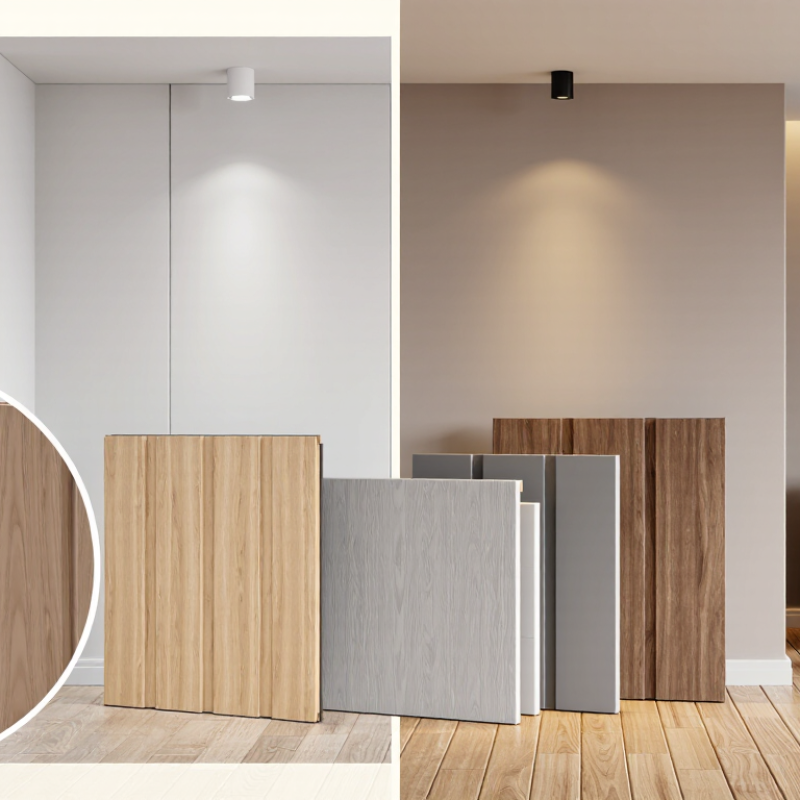
10 Tips for Choosing Indoor WPC Wall Panels
Compare designs in the room, not only in an online catalog. A narrow slat pattern can make a small hallway feel taller. Wider panels often create a calmer appearance in large living areas. Check how joints align around doors, corners, and electrical outlets. Poor alignment quickly weakens an otherwise attractive design. Request physical samples whenever possible. Screens can distort color and gloss.
Compare colors under morning, afternoon, and artificial light. Warm beige may appear yellow beside oak furniture. Deep gray can reveal dust more easily than expected. Texture matters as much as color. Brushed surfaces add visual depth, while smooth panels are easier to wipe. Run your fingers across a sample. Some textures feel convincing; others feel noticeably artificial. I once selected a beautiful dark finish that made a narrow room feel smaller. That choice needed more reflection.
Measure the wall height, width, and obstacles before choosing dimensions. Longer panels may reduce seams, but they can create difficult handling during installation. Standard widths can simplify cutting and replacement. Leave suitable movement gaps according to the installation instructions. Indoor moisture still changes materials slightly. Inspect the backing, edge finish, and locking method carefully. Confirm cleaning requirements and check applicable local fire and building rules. A practical choice balances appearance, maintenance, installation time, and future repairs.