
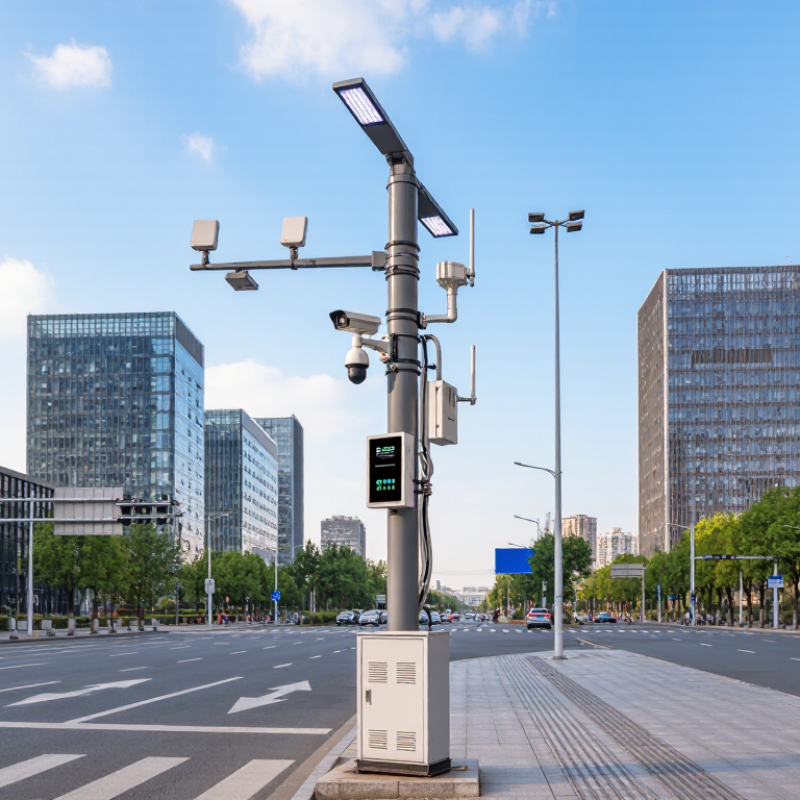
An intelligent pole is more than a streetlight on a post. It can combine lighting, sensors, and controls in one outdoor system.
The NEMA ANSI C136.41 seven-pin interface provides a defined connection between a luminaire and a compatible control device. Three larger contacts typically carry line, neutral, and switched power. Four smaller contacts support dimming and other low-voltage control connections, depending on the equipment.
That matters.
A controller fitted to the socket can adjust light output using schedules, photocell readings, or remote commands. The interface gives power and control signals a shared physical connection, while the wider communications system handles network access.
A seven-pin socket alone does not make a pole connected or intelligent. The controller and luminaire must support compatible functions, and settings need proper commissioning.
The diagram looks clean; field wiring rarely does. Moisture, loose contacts, and mismatched dimming settings can cause flicker or prevent expected control.
Technicians should check the wiring plan and verify operation at the pole, not rely only on a parts list.
It is a practical interface, but not a magic one.