
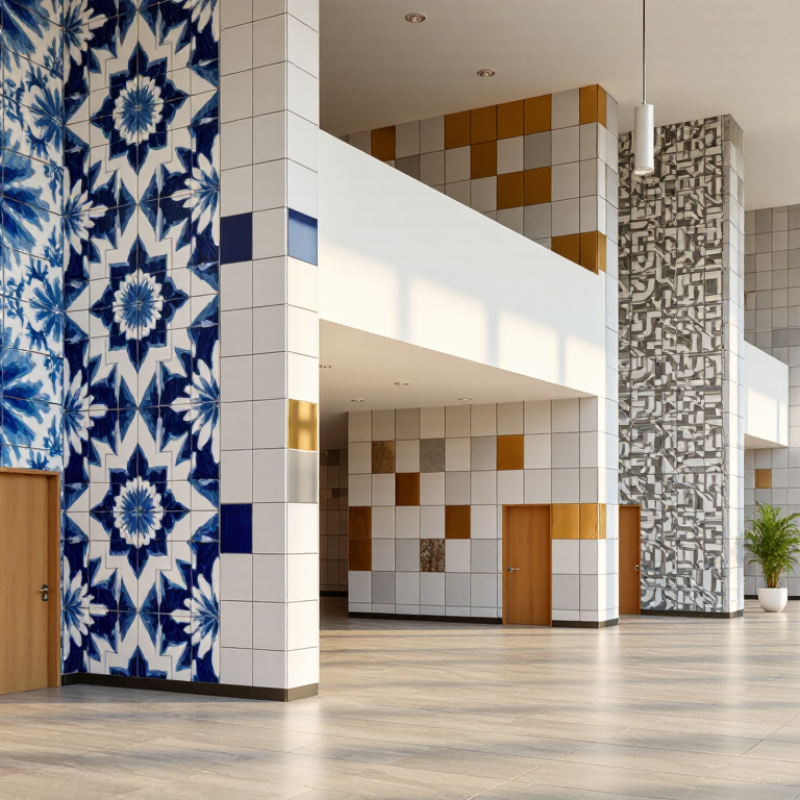
Decorative art tiles can transform a hotel lobby, but beauty must survive daily movement.
For global projects, begin with the traffic pattern, not the color board. A quiet gallery entrance differs from a busy airport corridor. Consider grit, luggage wheels, wet shoes, and cleaning frequency. These details often decide whether a tile remains attractive.
PEI ratings help assess abrasion resistance on glazed tile surfaces. Higher classes generally suit heavier pedestrian use, while lower classes may fit walls or lightly used areas.
However, PEI is not a universal durability score. It does not measure impact, slip resistance, chemical exposure, or freeze-thaw performance.
ISO 10545-7 testing provides a controlled assessment of surface wear through repeated abrasion. Request the test method, result, and recommended application. Numbers need context.
I have seen design teams specify a beautiful low-wear tile near entrances, then revise the plan after reviewing sand and trolley traffic.
A better review places sample panels near real doors for several weeks. Check color changes under dry dust, muddy water, and routine cleaning.
One overlooked issue was grout staining. It changed the visual effect more than expected.
For multi-country projects, confirm local conditions and maintenance practices with qualified testing professionals. Keep spare tiles from the same production batch when feasible.
Specifications can be imperfect. That is why field evidence matters.