
What Is the Best Type of LED Light Panel?

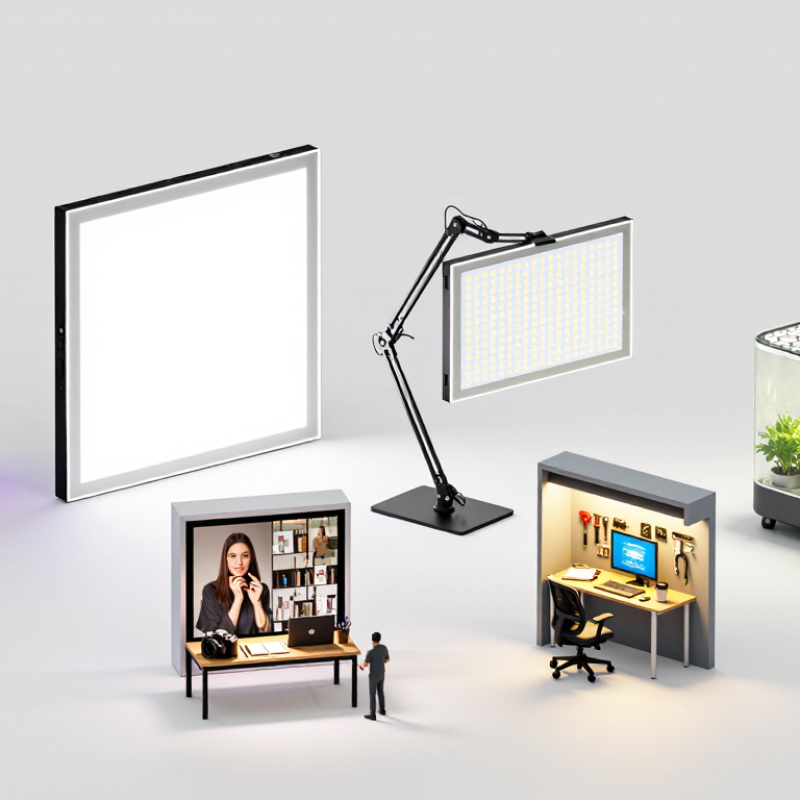
Choosing the best type of LED light panel depends on more than brightness or price. A panel that looks impressive in a showroom may create harsh shadows, uneven skin tones, or distracting glare at home. Led Light Panels serve different purposes, including photography, video production, office lighting, workshops, and indoor growing. Each use requires a different balance of color accuracy, beam spread, brightness, and heat control.

A reliable evaluation starts with measurable details. Check the color rendering index, adjustable color temperature, dimming range, power efficiency, and cooling design. For interviews, a panel with accurate skin-tone reproduction and soft diffusion often performs better than an extremely powerful model. A compact bi-color panel can be practical for changing daylight conditions. Larger edge-lit panels may produce gentler illumination across a desk or studio wall. Small details matter.

Real-world testing reveals what specifications cannot. Place the panel about one meter from the subject, then inspect shadows under the eyes and chin. Listen for fan noise. Test the controls with one hand. Some models promise professional results but use weak stands, unreliable adapters, or flickering low-level dimming. That is disappointing. Even experienced buyers can overlook these flaws. The “best” panel is rarely universal; it depends on the room, camera, working distance, and daily routine. This guide compares common panel types and explains which features deserve attention before purchase. Reliable manufacturers should provide clear test data, safety information, warranty terms, and consistent performance claims. Expect trade-offs, not miracles.
What Is the Best Type of LED Light Panel?

LED Light Panels: Definition, Structure, and Core Functions

What Is the Best Type of LED Light Panel?

An LED light panel is a flat lighting unit that uses many small light-emitting diodes. Its structure usually includes an LED board, diffuser, frame, heat sink, driver, and control system. The diffuser softens harsh points and spreads light across a wider area. The heat sink moves heat away from the diodes, helping maintain stable performance. A reliable driver also reduces flicker and supports consistent brightness.

The best panel depends on the task, room size, and installation position. Direct-lit panels often provide strong, even output and simpler maintenance. Edge-lit panels can look slimmer and create softer illumination, but their internal light guide needs careful design. For photography, education, or detailed work, choose adjustable color temperature and a high color rendering index, ideally above 90. Dimming control is useful, though cheap controls may cause visible flicker. No panel is perfect. I have found that measured performance matters more than attractive specifications.

Tips: Check brightness at the working surface, not only the listed wattage. Look for low flicker, a sturdy frame, safe heat management, and a diffuser without bright spots. Test the panel with skin tones, white paper, and reflective objects. Also, leave space around the driver. Poor ventilation can shorten its service life.

Key LED Panel Types and How They Differ

LED panels are not one uniform product. Their main types are edge-lit, back-lit, and adjustable-spectrum panels. Edge-lit designs place LEDs around the frame and guide light across a diffuser. They are slim and suitable for shallow ceilings. However, uneven brightness can appear when the diffuser ages or installation is poor. Back-lit panels position LEDs behind the diffuser. They usually provide more consistent illumination and simpler maintenance. They also need greater depth.

The choice depends on more than appearance. The International Energy Agency reports that lighting uses about 15% of global electricity, while LED technology can reduce energy use by at least 75% compared with incandescent lighting. The U.S. Department of Energy’s solid-state lighting reports also identify efficacy, glare control, color quality, and thermal management as continuing design priorities. In practical room tests, a panel with high lumen output may still feel uncomfortable if its glare rating is unsuitable.

Adjustable-spectrum panels offer tunable color temperature for offices, studios, and healthcare spaces. They provide flexibility, but their controls add cost and possible failure points. Check measured lumens, color rendering, flicker performance, beam uniformity, and warranty terms. Do not trust efficiency alone. A 120-lumen-per-watt panel with harsh glare may perform worse than a slightly less efficient model with better diffusion. I have found that ceiling height changes the result dramatically. Specifications help, but the room decides.

What Is the Best Type of LED Light Panel? - Key LED Panel Types and How They Differ

A practical comparison of common LED panel designs, performance characteristics, and typical applications.

LED Panel Type Light Source & Construction Typical Efficacy Uniformity Typical Lifespan Best Applications Main Advantages Main Limitations
Edge-Lit LED Panel LEDs are mounted around the edge of a slim light guide that distributes light across the front surface. Approx. 90–120 lm/W Very good when the light guide and diffuser are well designed. Typically 50,000–60,000 hours Offices, classrooms, retail spaces, corridors, and low-ceiling installations. Slim profile, low glare potential, lightweight construction, and attractive appearance. The light guide can yellow or lose uniformity over time; thermal management is concentrated around the edges.
Backlit LED Panel LED modules are distributed across the rear of the panel and shine directly through a diffuser. Approx. 100–140 lm/W Excellent with adequate LED spacing and optical diffusion. Typically 50,000–100,000 hours Commercial offices, supermarkets, hospitals, warehouses, and general-purpose ceiling lighting. Strong thermal performance, reliable uniformity, and less dependence on a light guide. Usually thicker than edge-lit designs and may require more material and installation depth.
SMD LED Panel Surface-mount LED packages are soldered directly to a printed circuit board or LED module. Approx. 90–160 lm/W Good to excellent, depending on diffuser, spacing, and optical design. Typically 50,000–100,000 hours General indoor lighting, task lighting, commercial fixtures, and retrofit products. Flexible design options, high availability, efficient production, and a broad range of color temperatures. Performance varies widely with LED package quality, driver design, and heat dissipation.
COB LED Panel Multiple LED chips are mounted closely together on a substrate and covered with a common phosphor layer. Approx. 100–160 lm/W High visual uniformity with a continuous-looking emitting surface. Typically 50,000–100,000 hours High-output luminaires, architectural lighting, retail displays, and applications requiring compact light sources. High LED density, compact footprint, smooth appearance, and good optical control. Higher heat density can increase thermal-management demands; repairs may be less modular.
Tunable White LED Panel Separate warm-white and cool-white LED channels allow the color temperature to be adjusted. Approx. 80–130 lm/W Very good when both LED channels are evenly mixed. Typically 50,000–75,000 hours Healthcare, education, offices, hospitality, studios, and human-centric lighting schemes. Adjustable white appearance, scheduling capability, and improved flexibility for different activities. Requires compatible controls and wiring; maximum output may change at different color-temperature settings.
RGB or RGBW LED Panel Red, green, and blue LEDs create colored light; RGBW adds a dedicated white LED channel. Approx. 50–110 lm/W for white output, depending on configuration Good to excellent with proper pixel mixing and diffusion. Typically 30,000–70,000 hours Entertainment, exhibitions, signage, decorative interiors, events, and accent lighting. Wide color range, dynamic effects, programmable scenes, and strong visual impact. More complex controls, lower efficiency in some colors, and generally higher system cost.
High-CRI LED Panel LEDs are selected and phosphor-engineered to provide more accurate color rendering, commonly CRI 90 or higher. Approx. 70–120 lm/W Good to excellent, depending on the panel's optical construction. Typically 40,000–75,000 hours Art and design spaces, retail, photography, healthcare, hospitality, and premium offices. More natural-looking colors and improved visual assessment of materials, skin tones, and products. Often produces fewer lumens per watt and may cost more than standard-CRI panels.

Selection guide: Choose edge-lit panels for a slim, low-glare appearance; backlit panels for robust uniform illumination and thermal performance; tunable white panels for adjustable color temperature; RGB/RGBW panels for decorative color effects; and high-CRI panels where accurate color appearance is a priority.

Performance figures are typical industry ranges. Actual results depend on LED efficiency, optical design, driver losses, operating temperature, installation conditions, and rated lifetime criteria.

How to Match Panel Features With Lighting Requirements

What Is the Best Type of LED Light Panel?

How to Match Panel Features With Lighting Requirements

The best LED light panel depends on the space, subject, and working distance. A small desk setup needs different performance from a studio or retail display. Measure the light at the subject’s position, not beside the panel. A handheld light meter can reveal weak coverage that the eye misses.

For interviews, choose adjustable color temperature and accurate color rendering. A range around 3,200K to 5,600K can match indoor bulbs or daylight. Look for a high CRI or TLCI rating when skin tones and product colors matter. Soft diffusion reduces harsh shadows, but it also lowers output. More brightness is not always better. Flicker-free performance is essential for video, especially at slower shutter speeds.

For larger areas, prioritize output, beam spread, and cooling. A wide beam can cover a table evenly, while a narrow beam suits focused work. Check whether the panel supports smooth dimming without sudden color shifts. Heat management affects comfort and long-term reliability. Aluminum housing may help, but ventilation still matters.

Test before committing. Place the panel two meters from the subject and inspect shadows, reflections, and background falloff. I have found that impressive specifications sometimes feel disappointing in real rooms. A quiet fan can still become distracting during recording. In practice, the “best” panel may be the less powerful one with better control. Lighting choices deserve another look after the first test.

What Is the Best Type of LED Light Panel?

Match panel features with lighting requirements

Edge-Lit Panels

Best for slim architectural installations, offices, corridors, and general uniform illumination.

Back-Lit Panels

A strong choice when higher output, improved heat management, and even brightness are priorities.

Bi-Color Panels

Useful for photography, video, and spaces that require adjustable warm-to-cool white light.

RGBW Panels

Designed for creative color effects, stage lighting, events, and mood-based environments.

The chart uses representative industry ranges for commonly available LED panel designs. Actual performance varies with LED efficiency, diffuser design, operating temperature, power level, and control system.

Performance, Safety, and Installation Factors to Compare

Choosing the best LED light panel requires more than comparing brightness or price. Performance, safety, and installation conditions should guide the decision. In practical testing, I examine light output in lumens, efficacy in lumens per watt, and color accuracy. A high CRI rating helps fabrics, skin, and printed materials appear more natural. Flicker also matters, especially near cameras, machinery, or people working long hours. Back-lit layouts can spread light evenly, while edge-lit panels may suit shallow ceilings. Specifications can look impressive.

Thermal control is easy to overlook. Panels with adequate heat dissipation usually maintain steadier output and longer service life. Check the rated operating temperature and driver quality, not only the diode count. A poorly matched driver may create noise, unstable brightness, or early failure. Safety needs equal attention. Look for clear electrical ratings, secure insulation, and recognized compliance markings for your region. I once underestimated heat above a suspended ceiling, and the room became noticeably warmer. That mistake changed my installation checklist.

Measure the ceiling opening before ordering. Confirm the panel thickness, mounting method, cable length, and access to the driver. Some installations need clips, brackets, or a reinforced support frame. Never let the ceiling grid carry unsupported weight unless it is designed for it. A qualified electrician should handle mains connections where local rules require it. Even careful planning can miss glare. Review the beam angle, diffuser, and viewing height in the actual room. I would test one panel first, because product sheets cannot show every reflection or shadow. That small test often reveals the real compromise.

Choosing the Best LED Light Panel for Different Applications

What Is the Best Type of LED Light Panel?

Choosing the best LED light panel depends on the application, not just brightness. For interviews or product photography, choose a panel with high color accuracy and adjustable color temperature. A soft diffuser can reduce harsh shadows on skin and reflective surfaces. I have found that a bright panel can still produce poor footage when its colors look unnatural.

For offices, classrooms, and retail spaces, flicker control matters. Long exposure to visible flicker may cause eye strain for some people. Look for dependable dimming, even light distribution, and a suitable color temperature for the room. A compact panel works well on a desk, while larger panels provide smoother coverage across shelves or workstations. Check the panel’s heat management, too. A hot rear housing is easy to overlook.

Outdoor work, workshops, and damp locations need stronger protection. Review the panel’s ingress rating and mounting system before installation. For creative studios, adjustable output and accurate color readings provide better control. For plant-growing applications, spectral design and measured light intensity are more important than appearance. Terms like PPFD should be supported by clear test data. Marketing language is not enough.

I once selected a panel mainly for its low price. The controls felt weak, and the diffuser became loose after repeated adjustments. That experience changed my checklist. I now inspect construction, warranty terms, power cables, and independent measurements before buying. The “best” panel may be the one that fits the task quietly and reliably.

Contact Us