
What Is Azul Macaubas Quartzite Uses Colors and Price?

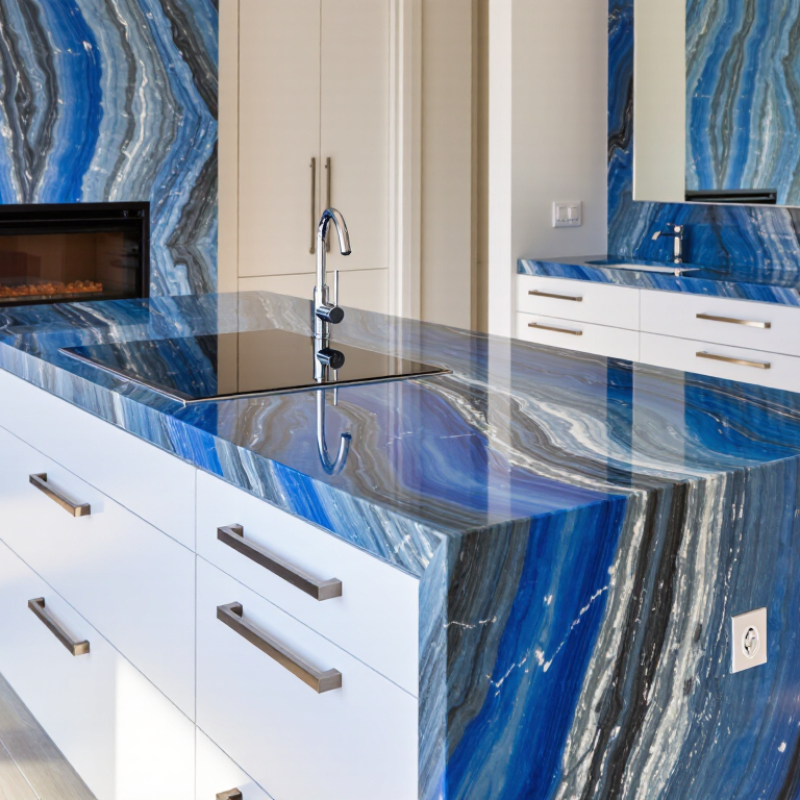
Azul Macaubas Quartzite is known for its vivid blue movement, pale veining, and unmistakable natural character. It can transform a kitchen island, bathroom vanity, fireplace, or feature wall into a visual centerpiece. Yet every slab behaves differently. Some show electric cobalt ribbons, while others display softer blue-gray clouds and white mineral streaks.

Natural-stone consultant Peter Marcucci offers a useful reminder: “Stone is a natural product, and no two pieces are alike.” That principle matters when choosing Azul Macaubas Quartzite. A showroom sample may not represent the full slab. Vein direction, fissures, thickness, polishing quality, and resin treatment can change the final appearance. View the actual slab whenever possible.

The material is often selected for countertops because quartzite can provide strong performance when properly fabricated and sealed. Still, it is not maintenance-free. Acidic spills, sharp impacts, and neglected sealing may leave marks. The price also varies widely. Quarry source, color intensity, slab size, finish, availability, transportation, and installation all influence the final cost. Premium blue patterns usually command more. Sometimes, dramatically more.

This guide explains Azul Macaubas Quartzite uses, colors, durability considerations, and price expectations. It also examines what buyers may overlook, including slab inspection and installation limitations. The stone is beautiful. But beauty alone is not enough. A careful decision requires comparison, realistic budgeting, and a willingness to accept natural imperfections.
What Is Azul Macaubas Quartzite Uses Colors and Price?

Azul Macaubas Quartzite: Definition and Geological Characteristics

What Is Azul Macaubas Quartzite Uses Colors and Price?

Azul Macaubas Quartzite is a natural metamorphic stone quarried mainly in Bahia, Brazil. It began as quartz-rich sandstone. Heat and pressure then recrystallized its grains into a dense, interlocking structure. This process gives the stone strong resistance to abrasion and moderate resistance to scratching.

Its signature color ranges from pale sky blue to deeper ocean blue. White, gray, and charcoal veins may cross the surface like flowing water. The blue appearance comes from quartz crystals and trace mineral inclusions. Exact patterns differ between blocks, so no two slabs look completely identical. Some pieces show cleaner movement, while others contain visible mineral clouds. That variation is beautiful, but it can complicate matching.

The stone suits countertops, bathroom walls, islands, fireplace surrounds, and carefully selected flooring. Price depends on origin, thickness, grade, finish, and local availability. A dramatic slab usually costs more than a quieter selection.

Tips: Request a full slab photo before purchasing. Inspect it under natural and artificial light. Ask a qualified fabricator to check fissures, resin treatment, and edge stability. Use a penetrating sealer, but do not assume sealing makes the surface stain-proof. Acidic cleaners can dull the finish. A small sample test is wise, because online colors may mislead.

What Is Azul Macaubas Quartzite? Uses, Colors and Price

Definition and Geological Characteristics
Data Dimension Azul Macaubas Quartzite Data Practical Significance
Stone Type Natural quartzite, a metamorphic rock formed from quartz-rich sandstone under intense heat and pressure. Offers the appearance of a luxury natural stone with generally high hardness and durability.
Geographic Origin Traditionally associated with the Macaúbas region of Bahia, Brazil. Origin, quarry zone and individual block can cause noticeable differences in color and pattern.
Geological Composition Predominantly interlocking quartz grains, with smaller amounts of feldspar, mica and blue-colored mineral inclusions. Mineral composition contributes to its strength, movement and distinctive blue appearance.
Color Range Blue, sky blue, gray-blue and blue-green, often combined with white, gray, cream or charcoal veining. Each slab is visually unique; samples should be reviewed before final selection.
Pattern and Texture Typically displays flowing veins, cloudy movement, linear bands or dramatic mineral patterns with a polished surface. Bookmatched layouts can emphasize large-scale veining in walls and feature areas.
Mohs Hardness Approximately 7 on the Mohs scale, reflecting the high quartz content. Usually suitable for demanding interior surfaces, although it can still be damaged by impact or improper fabrication.
Heat Resistance Generally more heat-resistant than engineered quartz because it is a natural stone, but sudden or prolonged heat can still affect sealers or cause thermal shock. Use trivets or heat barriers for hot cookware and avoid direct thermal shock.
Recommended Interior Uses Kitchen countertops, islands, bathroom vanities, shower walls, fireplace surrounds, backsplashes, bar tops and accent walls. Best suited to applications where its natural movement can be displayed as a design feature.
Outdoor Suitability Can be used outdoors in suitable climates when the specific slab has appropriate absorption and weathering performance. Confirm freeze-thaw conditions, UV exposure, edge detailing and sealing requirements before installation.
Maintenance Clean with a pH-neutral stone cleaner and soft cloth; avoid strong acids, abrasive powders and harsh chemicals. Periodic resealing may be recommended depending on the stone's absorption, finish and level of use.
Typical Slab Thickness Commonly available in approximately 2 cm and 3 cm nominal thicknesses, subject to regional availability. Thickness affects edge profiles, support requirements, fabrication and total project cost.
Indicative Material Price Approximately USD $80–$200 per square foot for premium material in many retail markets. Price varies with color intensity, veining, slab size, thickness, finish, availability and geographic location.
Estimated Installed Price Approximately USD $120–$300 or more per square foot, including common fabrication and installation factors. Complex edges, cutouts, waterfall panels, bookmatching, transport and difficult access can increase the final cost.
Note: Price ranges are indicative market estimates in U.S. dollars and are not fixed quotations. Natural stone properties and appearance can vary from slab to slab, so the exact material should be inspected before purchase and installation.

Distinctive Colors, Patterns, and Surface Finishes

Azul Macaubas quartzite is valued for its vivid blue background, white movement, and occasional gold or gray veining. Each slab resembles flowing water, but no two slabs match perfectly. That variation creates strong kitchen islands, bathroom walls, fireplace surrounds, and reception counters. It can also complicate large, continuous designs.

Surface finish changes the stone’s personality. A polished finish deepens blue tones and sharpens the contrast between veins. A honed finish looks softer and more architectural, with less reflection. Leathered surfaces add subtle texture and can disguise light fingerprints. However, textured finishes may require more careful cleaning around their low points.

In my experience, small samples often mislead. Full slabs reveal the true pattern scale. Grand View Research reported a global natural stone market value of about USD 51.9 billion in 2023, with continued growth expected through 2030. That wider market trend supports quartzite’s popularity, but it does not establish a fixed Azul Macaubas price. Slab thickness, grading, availability, fabrication, and installation usually control the final quote.

Tips: View slabs under the project’s actual lighting. Ask for a water-absorption test and a written care recommendation. Compare polished and honed samples beside cabinet colors. Also, inspect the back of the slab; repairs or mesh reinforcement may affect fabrication planning. A dramatic vein can become distracting when poorly bookmatched. That risk deserves discussion before cutting.

Common Interior and Architectural Uses

Azul Macaubas quartzite is best known for blue, white, and soft gray movement. Some slabs also show subtle gold or brown lines. Its appearance changes under warm lighting, so a showroom sample can be misleading. In my experience, full-slab viewing gives a more reliable design impression. The stone can be costly, with price affected by availability, thickness, slab quality, fabrication, and installation.

Common interior uses include kitchen islands, countertops, bathroom vanities, shower walls, and fireplace surrounds. Large islands can display its flowing veins like natural artwork. However, strong patterns may look crowded beside heavily decorated cabinets. It also suits reception desks, hotel lobbies, feature walls, and stair surfaces in commercial interiors.

A polished finish creates depth, while a honed finish feels quieter and hides small marks better. It is durable, but careless handling can still cause chips or stains.

Tips: Request photos of the actual slabs before approval. Mark the preferred vein direction with the fabricator. Confirm edge profiles, seam locations, and support requirements early. Seal the surface according to the stone specialist’s advice, then clean spills promptly. I would not choose it from a small sample alone. That shortcut often creates regret. Its beauty is real, but the final room may feel different from the original design board.

Factors Affecting Azul Macaubas Quartzite Prices

What Is Azul Macaubas Quartzite Uses Colors and Price?

Azul Macaubas quartzite is valued for its blue background, white movement, and occasional gray or gold veining. Designers often specify it for kitchen islands, bathroom walls, fireplace surrounds, and feature panels. Its visual pattern varies sharply between slabs. Matching them requires careful layout and extra material.

Price depends heavily on quarry selection, block quality, and supply. Public 2024–2025 market checks commonly place premium slabs near $80–$180 per square foot, before fabrication and installation. Exceptional book-matched material can exceed $250 installed. These figures are indicative, not fixed.

The U.S. Geological Survey’s Mineral Commodity Summaries 2025 shows that dimension-stone costs are influenced by extraction, processing, and transport. International Trade Centre 2024 data also indicates that worked-stone trade values vary substantially by origin and finishing level.

Thickness and surface finish change the estimate. A 20-millimeter slab usually costs less than a 30-millimeter slab, while leathered or honed finishes may require specialized processing. Freight can become significant for remote projects. Fabricators also price cutting, edge profiles, sink openings, sealing, and breakage risk.

Natural Stone Institute installation guidance supports allowing extra material for complex layouts, although waste percentages differ by project. Ten percent is common, but not guaranteed. Price comparisons can be misleading when one quote excludes delivery or reinforcement. A detailed slab inspection remains essential, because a dramatic vein may increase value or create difficult cutting decisions.

Care, Maintenance, and Selection Considerations

Azul Macaubas quartzite is selected for its blue background, smoky gray movement, and distinctive golden or white veining. Each slab can look remarkably different. Therefore, view the full slab before approving a countertop design. Small samples may hide strong veins or darker areas. Ask a qualified fabricator to mark the safest cutting zones around sinks and cooktops.

Care begins with proper sealing, although sealing does not make the stone stain-proof. Follow the installer’s recommendation and test the surface with a few drops of water. If the area darkens quickly, the protection may need attention. Wipe spills promptly, especially coffee, wine, oil, and citrus juice. Use a pH-neutral stone cleaner and a soft microfiber cloth. Avoid abrasive powders, bleach, and acidic homemade solutions. They can dull the finish.

Use trivets under hot pans and cutting boards during food preparation. Quartzite tolerates heat well, but sudden temperature changes may stress vulnerable areas. Inspect edges regularly for small chips. No natural stone is maintenance-free. That reality is easy to overlook. Selection also requires more than color. Compare polished, leathered, and honed finishes under your actual lighting. Ask for the stone’s absorption information, repair policy, slab thickness, and installation details. Pricing varies with rarity, grade, thickness, fabrication, transport, and waste. A lower quote may exclude sealing or complex edge work, so request an itemized estimate before ordering.

Azul Macaubas Quartzite: Uses, Price, Care, and Selection Considerations

Typical U.S. retail price ranges for Azul Macaubas quartzite vary according to the project scope. Material-only slabs generally cost less than fabricated and fully installed countertops.

Azul Macaubas is commonly selected for countertops, backsplashes, bathroom vanities, islands, and feature walls. Its blue background and contrasting veining make slab-to-slab color matching important. Prices are indicative ranges in U.S. dollars per square foot and can change with thickness, finish, fabrication complexity, shipping, sealing, and local labor rates.

Contact Us