2026 Top Shipping Container Remodel Ideas You Must See?

Shipping container remodel projects are gaining immense popularity in recent years. They offer creativity and sustainability while maximizing space use. In 2026, exciting trends are emerging in this area. People are transforming shipping containers into homes, offices, and unique spaces.

There's plenty of room for innovation. For instance, some remodel ideas include merging multiple containers to create larger structures. Others focus on eco-friendly designs that incorporate solar panels and green roofs. However, not all projects succeed. Some designs may seem practical but fall short in execution. Issues like insulation and ventilation can arise if not properly addressed.

As we explore the top shipping container remodel ideas, it’s essential to consider both aesthetics and functionality. What works visually may not be the best solution. Balancing creativity with practicality is key to a successful remodel. Let’s delve into the remarkable possibilities that await in the world of shipping container remodels.

2026 Top Shipping Container Remodel Ideas You Must See?

Top Trends in Shipping Container Homes for 2026: An Overview

As we look ahead to 2026, shipping container homes are evolving rapidly. The popularity of these structures is expected to rise. According to a recent industry report, the market for prefab homes, including container homes, is expected to grow by 20% annually. This surge reflects a growing desire for sustainable living solutions. Eco-friendly options are becoming a priority for homebuyers.

In 2026, expect innovative designs that maximize space efficiency. Many containers now incorporate green technologies like solar panels and rainwater collection systems. This approach not only reduces utility costs but also contributes to environmental sustainability. However, challenges remain. Not every design is feasible for all climates. Some areas may face issues with insulation and heating. Finding the right balance between aesthetics and functionality will be crucial.

Additionally, communities are becoming more aware of zoning regulations. In some areas, shipping container homes can face strict codes. Buyers must navigate these challenges carefully. The trend is exciting, but it requires thoughtful consideration. As homeowners embrace this modern living style, it is essential to address these concerns proactively.
Maximizing Space: Innovative Layout Ideas for Container Remodeling

Shipping container homes are gaining popularity for their affordability and versatility. The global market for container housing is expected to reach $73 billion by 2028, according to industry reports. This trend highlights the growing interest in innovative living solutions, especially in urban areas where space is limited.


Maximizing space in container remodels requires creative layouts. Open floor plans are essential, allowing rooms to flow into one another. Consider multi-functional furniture. A bed that folds into the wall can free up valuable floor space. Also, using vertical space can make a significant difference. Shelving units that reach the ceiling can offer storage without crowding the room.


However, challenges exist in container remodeling. Not every layout suits every lifestyle. Some designs may lack privacy, especially in shared living spaces. Plus, insulation and ventilation must be carefully considered. Without proper insulation, containers can become too hot or too cold. Achieving a balance between aesthetics and function is crucial. Each design choice should reflect the specific needs of the residents while considering long-term viability in the ever-evolving housing market.

Sustainability in Container Design: Eco-Friendly Materials and Practices

Shipping container design is rapidly evolving, particularly with sustainability in focus. The shipping industry produces approximately 3% of global greenhouse gas emissions. Therefore, utilizing eco-friendly materials and practices is crucial. By repurposing shipping containers, we reduce waste and carbon footprints significantly. Each reused container mitigates the need for new raw materials, making a sizable environmental impact.

Tips for eco-friendly container remodeling include using recycled materials for insulation. Consider bamboo or reclaimed wood as alternatives. These materials not only reduce waste but also offer durability and aesthetic appeal. Furthermore, opt for solar panels to power your container living space. This renewable energy source can cut utility costs and promote sustainability.

Adding greenery through vertical gardens can enhance air quality. Although it requires maintenance, the benefits of plants in interior spaces are immense. They boost mood and improve overall well-being. The key challenge is ensuring these designs align with your lifestyle and environmental goals. Reflect on which practices resonate with you and make the necessary adjustments for a more sustainable future.

Cost Analysis: Budgeting for a Shipping Container Remodel in 2026

2026 Top Shipping Container Remodel Ideas You Must See?

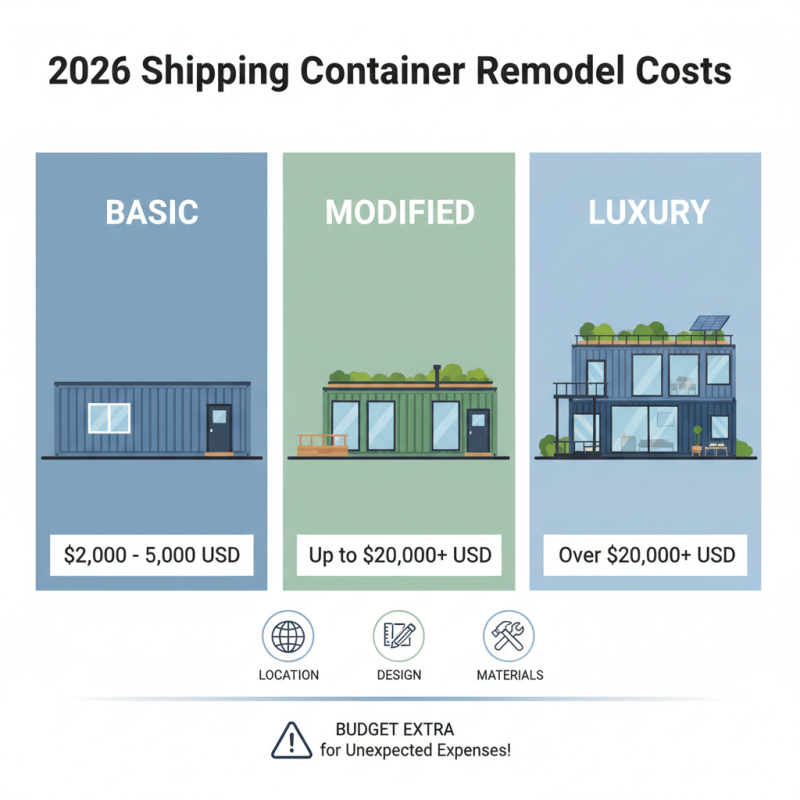
When planning a shipping container remodel in 2026, understanding costs is essential. Prices can vary greatly. Elements like location, design, and materials play a big role. A basic container can range from $2,000 to $5,000. However, fancy modifications can push costs over $20,000. Always budget extra for unexpected expenses. Renovation often reveals surprises.

Tips: Research and plan meticulously. Start with a clear budget. Include items like insulation and plumbing. Avoid rushing. Remember, cheap materials can lead to future costs. It's crucial to invest wisely.

Also, factor in permits and labor costs. These can sneak up on you. Local regulations can add to your budget. Make sure you understand what is needed. Transparency in pricing can help avoid stress. Building with containers can be a fantastic journey, but it's important to stay organized and thoughtful throughout.

Case Studies: Successful Shipping Container Conversions Around the World

Shipping container conversions have gained popularity worldwide. People are creatively transforming these metal boxes into homes, offices, and cafes. For example, in Australia, one family turned three containers into a modern family home. They integrated large windows for natural light. The design is open, creating a spacious feel. However, the challenge was insulation due to the container’s steel composition. Despite this, the family embraced a rustic vibe, using reclaimed wood and earthy colors.

In another case, an artist renovated a single shipping container into a gallery in Europe. The space is minimalist, enhancing the artwork on display. This creative use faced logistical hurdles. Transporting the container to the gallery location required detailed planning. Issues arose with local regulations, which delayed the project. Yet, the result was captivating. The gallery has become a meeting point for the community, showcasing local talents. These stories highlight both the potential and complexities of container remodeling. They inspire creativity but remind us of the importance of careful planning.

2026 Top Shipping Container Remodel Ideas You Must See

Idea Title Location Purpose Size (sq ft) Year Completed
Modern Container Home California, USA Residential 800 2024
Container Office Space New York, USA Commercial 600 2023
Café on the Go Paris, France Café 300 2025
Eco-Friendly Housing Tokyo, Japan Residential 1000 2026
Pop-Up Retail Shop Sydney, Australia Retail 400 2025

Contact Us