
2026 Best Construction Banner Types for Global Buyers

Construction sites communicate at a glance. A banner can identify a project, guide visitors, or display a contractor’s message along a fence. Yet the best material depends on the site, weather, viewing distance, and installation period. There is no universal winner.

This guide to 2026’s best Construction Banner types helps global buyers compare common options, including vinyl, mesh, fabric, and reinforced scrim. Each has practical trade-offs. Mesh allows wind to pass through, but fine details may look less crisp from close range. Vinyl can produce bold colors and clear lettering, though a solid sheet may catch gusts. Fabric offers a softer appearance for selected displays, but handling and cleaning needs can vary.

Small details matter. Check the finished size, hem, grommet spacing, print method, and expected outdoor exposure before requesting a quote. Ask suppliers for material specifications and a sample when color or texture is critical. A banner photographed in a studio may look different beside a dusty road or under strong midday sun. That is easy to overlook.

Buyer needs also differ across regions and projects. Shipping dimensions, packaging, and local installation conditions can affect the real cost. A lower unit price may not mean better value. This overview offers a starting point, not a substitute for checking project requirements with a qualified supplier. The choice is rarely perfect. It should be informed.
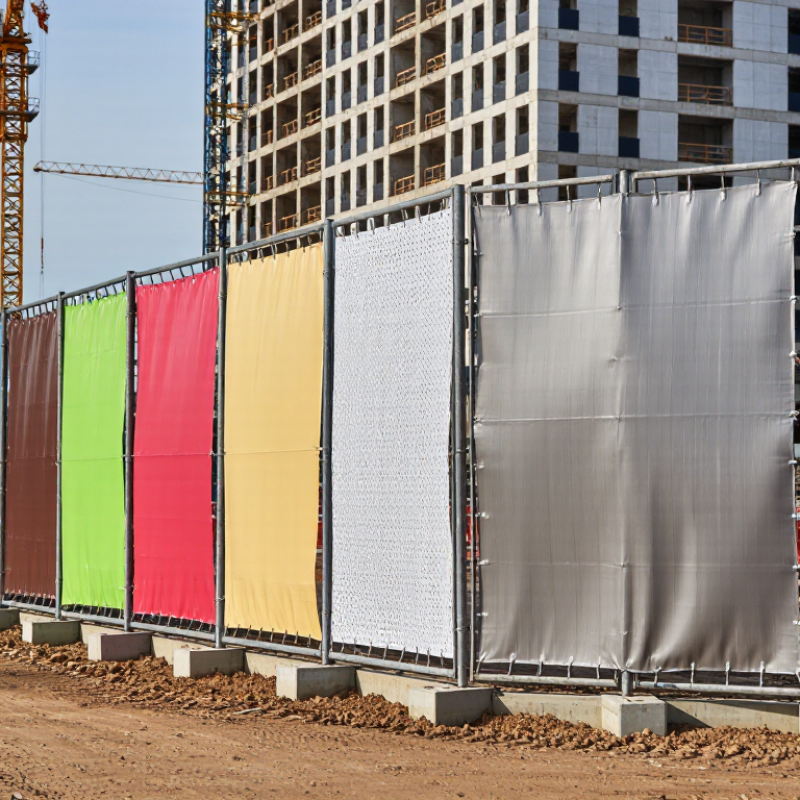
2026 Best Construction Banner Types for Global Buyers

Construction Banner Types Explained for Global Buyers in 2026

Construction Banner Types Explained for Global Buyers in 2026

Construction banners must match the site, climate, viewing distance, and installation method. Mesh banners suit windy facades because perforations reduce pressure. They also preserve visibility around scaffolding. Vinyl banners provide stronger color density for fences, gates, and project announcements. Fabric banners feel lighter and reduce glare, but they may need careful tensioning outdoors. Reflective banners improve night visibility near vehicle entrances. Rigid panels work better when buyers need sharp graphics and repeated use.

Material selection now deserves closer scrutiny. UNEP and the Global Alliance for Buildings and Construction reported that buildings consumed 32% of global energy in 2023. The sector also produced 34% of global energy and process-related emissions. This makes reusable banner systems more credible than disposable campaigns. Smithers’ 2024 study, The Future of Digital Print for Signage to 2028, identifies durable wide-format graphics as a continuing commercial application. Buyers should request UV resistance, tear strength, fire-performance documentation, and recyclable-material details. Local standards still differ.

Small details matter.

A banner with reinforced hems, stainless eyelets, and accurate color proofing usually survives installation better. Yet no material performs perfectly. Mesh can weaken at stressed eyelets. Fabric can absorb moisture. Even reflective surfaces may appear dull after dust exposure. Specify wind conditions, cleaning access, print dimensions, and expected service life before comparing prices. A cheaper banner may become expensive after one storm.

Material Options and Their Best Construction Site Applications

2026 Best Construction Banner Types for Global Buyers

Material choice should follow the site condition, not only the artwork. PVC mesh suits perimeter fencing and scaffold screening because its perforations reduce wind pressure. A 270–400 gsm mesh can remain visible while allowing airflow. However, eyelets and reinforced hems often fail before the printed surface. Request pull-testing records, not attractive samples alone.

Coated PVC vinyl provides strong color density for solid hoarding, site entrances, and temporary building wraps. It handles rain well, but its weight increases installation demands. For indoor corridors, fabric polyester is lighter and easier to fold. It also reduces glare near lighting. In sensitive projects, recyclable polypropylene or PVC-free fabric may support better material policies, though availability and finishing quality vary by supplier.

The waste issue deserves attention. The U.S. Environmental Protection Agency reported about 600 million tons of construction and demolition debris in 2018. A banner is small, but thousands of short-use sheets are not. UNEP’s 2024 Global Status Report states that buildings and construction used 32% of global energy and produced 34% of energy-related carbon emissions in 2022. Buyers should therefore compare service life, repairability, and end-of-use routes. A reusable mesh system may outperform a cheaper sheet. Sometimes, it will not. Wind exposure, fixing methods, and local recycling access can change the result. Check ISO 4892-3 weathering requirements and relevant fabric tear-strength tests before approving volume production.

2026 Best Construction Banner Types for Global Buyers

Material options and their best construction site applications

The comparison uses a practical suitability score from 1 to 5, based on typical construction-site requirements such as wind permeability, weather resistance, print visibility, portability, and reuse potential. PVC mesh is generally preferred for scaffold screens and windy locations, while coated PVC vinyl is suitable for high-impact walls and long-term outdoor advertising. Polyester fabric is lightweight and effective for indoor or short-term displays, and polyethylene woven banners offer a cost-efficient option for temporary fencing and directional signs.

Comparing Banner Sizes, Printing Methods, and Weather Resistance

2026 Best Construction Banner Types for Global Buyers

Comparing banner sizes starts with the viewing distance and installation surface. A 2-by-6-meter banner suits narrow fences and short roadside barriers. Larger 3-by-10-meter banners create stronger visibility around open construction sites. Measure the frame before ordering. Small errors can cause wrinkles, tension, or unsafe mounting. Mesh banners work better on windy scaffolding because perforations reduce air pressure. They may look less vivid from nearby distances.

Printing methods affect color, sharpness, and outdoor service life. UV printing produces crisp details and dries immediately, which helps with fast production schedules. Solvent-based printing can provide strong outdoor performance on flexible PVC materials. Dye-sublimation is lightweight and useful for fabric banners, but fabric usually needs careful tensioning. Request a physical proof. Digital previews can hide color shifts.

Weather resistance needs more than waterproof material. Ask for reinforced hems, rust-resistant eyelets, and suitable corner protection. UV-resistant inks help reduce fading under strong sunlight. In cold regions, flexible substrates are less likely to crack. In rainy climates, sealed edges prevent water from entering layered materials. There is no perfect banner. A thick PVC sheet may last longer, yet it can create more wind load and shipping weight. I would rather choose a balanced specification than simply select the heaviest option. Check local installation rules and inspect the banner after severe weather. That small step is often forgotten.

Safety, Compliance, and Branding Requirements by Market

2026 Best Construction Banner Types for Global Buyers

Construction banners are safety tools before they become branding assets. The International Labour Organization reported 2.93 million work-related deaths annually in 2023. It also recorded about 395 million non-fatal work injuries. Those figures make visibility, legibility, and placement practical compliance issues. Safety comes first.

Market rules differ sharply. In the United States, OSHA 29 CFR 1926.200 covers construction signs, signals, and visibility requirements. OSHA reported 1,069 construction fatalities in 2022; the Fatal Four caused 38.4% of them. European buyers should check local adoption of ISO 7010 symbols and ISO 3864 design principles. Australia, the Gulf region, and Southeast Asia may require different languages, colors, or reflective performance. Never assume one artwork fits every site.

A reliable banner uses short warnings, strong contrast, weather-resistant fabric, and readable type from moving equipment. Add local emergency information only after verification. Branding should remain secondary, with logos placed away from hazard messages. A crowded banner may look impressive but fail under dust, glare, or rain. That weakness is easy to miss. Buyers should request colorfastness, flame-performance, tear-strength, and installation evidence from suppliers. Requirements still vary by project, and some purchasing teams underestimate translation quality. Clear bilingual review is worth the extra day.

How to Select the Right Construction Banner Supplier and Product

2026 Best Construction Banner Types for Global Buyers

Selecting the right construction banner supplier begins with the site, not the sales brochure. A mesh banner suits windy scaffolding because perforations reduce air pressure. Solid PVC banners provide stronger color and clearer safety messages on temporary walls. Fabric banners can create a cleaner appearance for public-facing developments, but they may require careful tensioning and weather protection.

Ask suppliers for material specifications, finished samples, and recent project photos. Check banner weight, eyelet spacing, tear resistance, print durability, and expected outdoor service life. Request color samples under daylight, not only digital previews. Details matter.

A reliable supplier should explain production tolerances, packaging methods, replacement procedures, and delivery schedules in writing. For global orders, confirm dimensions, measurement units, labeling, and destination requirements before payment. Safety wording and visibility may also depend on local construction rules, so request documentation rather than trusting general claims. Ask for proof.

I once saw a banner fail because its eyelets were spaced too widely for a windy fence. The artwork was excellent, but the installation plan was weak. That mistake is easy to repeat when buyers focus only on price. Compare the total cost, including reinforcement, freight, installation hardware, and possible reprints. No supplier gets every detail right. Clear questions reveal how they handle problems.

Contact Us