The question behind “2026 Best 8 x 12 Container for Global Buyers?” is practical, not cosmetic. Buyers need dependable dimensions, weather resistance, handling access, and predictable landed costs. An 8 x 12 container can support tools, inventory, archive storage, or compact site operations. Yet “best” changes with climate, cargo weight, delivery distance, and local handling equipment.
UNCTAD’s Review of Maritime Transport 2024 states that ships carry over 80% of world merchandise trade by volume. That figure explains why container availability, port congestion, and freight volatility still influence purchasing decisions. The World Bank’s Logistics Performance Index 2023 also shows major differences in customs, infrastructure, shipment pricing, and delivery reliability between markets. These differences matter when a buyer compares a factory-direct unit with a locally stocked model.
Rebeca Grynspan, UNCTAD Secretary-General, has said, “Shipping is the backbone of global trade.” Her observation fits this product category closely. A container is not merely a steel box; it is a small logistics asset. Buyers should examine Corten or equivalent steel, door seals, floor treatment, ventilation, corner castings, certification, and after-sales support. Some suppliers present attractive prices without showing delivery assumptions. That is a weakness worth questioning.
There is no universal winner. A marine-grade 8 x 12 container may suit wet coastal conditions, while an insulated model may perform better in extreme temperatures. Specifications can look impressive on paper. Field performance may disagree. This guide compares leading options for global buyers, using reported market evidence, practical inspection points, and a cautious view of total ownership cost.
2026 Best 8 x 12 Container for Global Buyers?
What Is an 8 x 12 Container and Who Needs One?
An 8 x 12 container is usually a compact storage unit, measuring about eight feet wide and twelve feet long. Its nominal footprint is 96 square feet. Actual internal space varies by wall thickness, floor design, and door placement. It is not normally an ISO ocean container, so buyers should not assume automatic international shipping compatibility. The label sounds universal. It is not.
UNCTAD’s Review of Maritime Transport 2024 recorded approximately 858 million TEUs in global container port throughput during 2023. That figure shows how efficiently standardized freight moves worldwide. An 8 x 12 unit serves a different purpose. It suits households needing seasonal storage, small contractors protecting tools, farms storing equipment, and retailers holding cartons near a worksite. It can also support temporary offices or project storage.
Measure the delivery route carefully. A narrow gate, soft ground, or overhead cable can stop a good purchase. Check steel condition, floor load, ventilation, lock protection, and water entry before ordering. Regional standards also differ. Some units use timber floors, while others use steel or composite materials. The World Bank’s Logistics Performance Index 2023 evaluated logistics systems across 139 economies, reminding buyers that delivery reliability depends heavily on location. A low price may hide crane fees, permits, or difficult unloading. I would not promise a perfect fit from photographs alone. Physical inspection, verified dimensions, and a written delivery plan remain safer.
For global buyers, the best 8 x 12 container starts with accurate dimensions, not attractive photos. An 8-foot width and 12-foot length describe external measurements in many listings. Internal space is smaller after wall panels, frames, and doors are fitted. Typical usable volume may range from 18 to 20 cubic meters, depending on height and insulation. Always request a technical drawing. Small differences matter.
Capacity includes more than cubic space. Check the payload rating, floor load, door opening, and ventilation design. A pallet may fit inside, yet fail to pass through the door. Two swing doors can improve access, but they may reduce wall strength if poorly reinforced. This detail is often overlooked.
A reliable structure usually combines weather-resistant steel, reinforced corner posts, strong top and bottom rails, and closely spaced floor crossmembers. Marine-grade plywood or treated steel flooring can handle demanding use, but each material needs different maintenance. Gasketed doors help control rain and dust. Vents reduce condensation. Forklift pockets and certified lifting points improve handling, when properly engineered.
Inspect welds, hinges, seals, and drainage paths before purchase. Ask for tested load data, coating details, and dimensional tolerances. Claims can be vague. I have seen “heavy-duty” units with thin door frames and weak floor edges. That mistake becomes expensive after repeated loading. An 8 x 12 container is not automatically suitable for international transport; confirm handling standards, local regulations, and the buyer’s intended route.
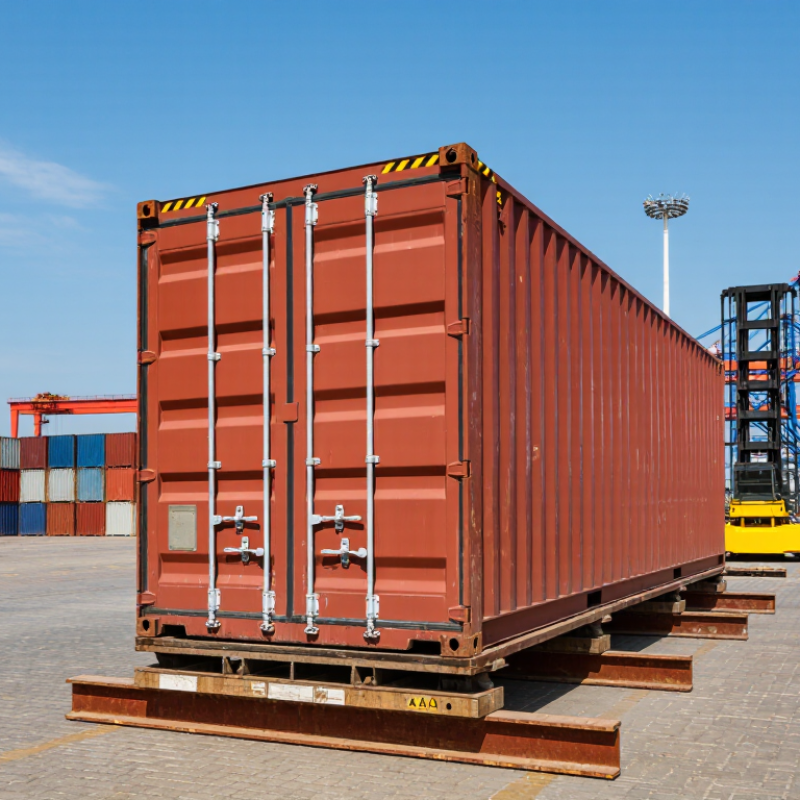
Key dimensions, capacity, materials, and structural features of a typical 8 × 12 ft steel storage container.
An 8 × 12 container usually provides a practical balance between compact site placement and usable storage volume. Typical construction includes weather-resistant corrugated steel wall panels, reinforced corner posts, top and bottom side rails, double doors with locking bars, and a raised plywood floor. Actual internal dimensions, payload, flooring thickness, ventilation, and lifting provisions vary by supplier and local compliance requirements.
2026 Best 8 x 12 Container for Global Buyers?
An 8 x 12 container can look identical online, yet perform differently in Rotterdam, Lagos, or Vancouver. For global buyers, compare the market before comparing the quotation. Confirm whether dimensions mean external or internal space. ISO 668 covers standardized freight-container dimensions, but 8 x 12 feet is usually a non-standard format. This affects vessel loading, rail transfers, chassis fit, and port acceptance. UNCTAD’s Review of Maritime Transport 2024 recorded 12.3 billion tons of maritime trade in 2023. That scale rewards compatibility, not attractive capacity claims.
In humid coastal markets, inspect welds, door seals, drainage, and anti-corrosion treatment. In cold regions, check insulation, floor movement, and condensation control. Agricultural buyers may need ventilation, while warehouse users may value security and clear door width. Payload also requires local verification. A unit rated for heavy storage may exceed road axle limits after loading. The World Bank’s Logistics Performance Index 2023 compares customs, infrastructure, tracking, and delivery timeliness. These factors can change the real landed cost more than a small price difference.
A practical comparison sheet should record steel thickness, floor loading, lock design, repair access, delivery route, and certification documents. Ask for photographs of corners and the underside, not only polished exterior images. A low quote can hide repainting, weak floors, or unsuitable lifting points. My own buying rule would still leave one uncomfortable gap: supplier documents do not replace an independent inspection. That extra check feels slow, but failed handling costs far more.
2026 Best 8 x 12 Container for Global Buyers?
An 8 x 12 container needs careful shipping planning because its footprint is not a common ISO container size. Buyers should confirm external dimensions, corner fittings, tare weight, and cargo capacity before booking transport. UNCTAD’s Review of Maritime Transport 2023 states that over 80% of global merchandise trade by volume moves by sea. That makes port handling and documentation critical.
Import rules differ by destination. Prepare the commercial invoice, packing list, bill of lading, origin documents, and accurate HS classification. Customs may also request material details, electrical certificates, or structural information. The World Bank’s Logistics Performance Index 2023 shows major differences between countries in customs efficiency and infrastructure quality. Delays often begin with unclear paperwork. Do not assume one document works everywhere.
Site preparation is more physical than many buyers expect. A level, compacted surface should support the loaded weight, with drainage around the placement area. Measure gate width, turning space, overhead cables, and crane access. Installation may require a local permit, lifting plan, anchoring, and weatherproof connections. Leave service clearance around doors. I would not trust a simple gravel pad without checking soil movement and rainfall. That shortcut can become expensive. A small measuring error can stop delivery entirely.
2026 Best 8 x 12 Container for Global Buyers?
Cost, Suppliers, Customization, and Buying Checklist for 2026
An 8 x 12 container offers useful storage without demanding a large site. Actual internal space varies by wall thickness and door design. In recent procurement reviews, buyers often underestimated delivery, unloading, foundation, and local tax costs. Request a complete landed-cost quote. It should include the container, freight, insurance, handling, duties, and installation. Prices can change quickly with steel costs and shipping capacity. Treat online estimates as planning figures, not promises.
Choose suppliers that provide material specifications, dimensional drawings, corrosion protection details, and inspection records. Ask for recent production photos and a sample contract. A dependable supplier should explain tolerances clearly. Custom options may include personnel doors, ventilation, lighting, shelving, insulation, windows, and reinforced floors. However, every cutout can affect strength, weather resistance, and lead time. Keep modifications practical. I once saw a project over-customized before its loading needs were measured. That mistake was expensive and avoidable.
Tips: Confirm the external dimensions, internal clearance, payload, floor rating, and lifting points. Check whether the container suits your climate and intended storage conditions. Compare at least three written quotations. Verify payment stages, warranty limits, replacement procedures, and delivery access. Ask for a pre-shipment inspection, preferably with dated photographs or an independent inspector. Measure the site twice. A narrow gate can stop the entire delivery. Allow contingency funds, because the cheapest quote may exclude essential work.
| Category | Metric | Typical 2026 Specification or Cost | Buyer Notes |
|---|---|---|---|
| Core Product Specifications | |||
| Dimensions | Nominal external size | Approximately 8 ft wide × 12 ft long, or 2.44 m × 3.66 m | Confirm whether the advertised dimensions are external, internal, or roof dimensions. |
| Dimensions | Typical internal floor area | About 88–92 sq ft, or 8.2–8.5 m² | Wall thickness, door framing, insulation, and internal lining reduce usable floor space. |
| Dimensions | Typical internal height | Approximately 7 ft 6 in–8 ft, or 2.29–2.44 m | High-cube height is not standard for every 8 × 12 model; request an exact drawing before purchase. |
| Capacity | Approximate internal volume | About 600–750 cu ft, or 17–21 m³ | The theoretical external volume is higher; usable volume depends on wall construction and door clearance. |
| Construction | Main frame and panels | Welded weather-resistant steel frame with corrugated steel wall panels | Ask about steel thickness, weld quality, corrosion treatment, and repair procedures. |
| Floor | Common floor system | Treated timber or marine-grade plywood over steel cross-members | Verify floor load rating, wood treatment, moisture resistance, and whether replacement boards are available. |
| Access | Door configuration | Single personnel door, double doors, or end-opening cargo doors | Double doors improve access for pallets and bulky items. Confirm clear opening width and height. |
| Security | Standard security features | Locking handles, padlock protection, reinforced door frame, and optional security box | A separate high-security lock is usually required. Check whether the lock box is welded or removable. |
| 2026 Cost Planning | |||
| Product Cost | Used unit in serviceable condition | Approximately USD 1,500–4,000 | Condition, age, local supply, paint, floor condition, and door operation have the greatest effect on price. |
| Product Cost | New or first-use unit | Approximately USD 3,000–6,500 | Small-format units can cost more per cubic foot than standard 20 ft or 40 ft freight containers. |
| Product Cost | Insulated or converted unit | Approximately USD 6,000–15,000+ | Electrical systems, lining, flooring, climate control, windows, and interior finishing can substantially increase cost. |
| Delivery | Local delivery and placement | Approximately USD 300–1,500 within a normal regional delivery radius | Distance, crane or tilt-bed requirements, site access, permits, and unloading conditions determine the final amount. |
| Site Work | Basic foundation preparation | Approximately USD 200–2,000+ | Costs may include compacted gravel, concrete pads, leveling, drainage, and vegetation removal. |
| Import Cost | Taxes, duties, port, and documentation | Destination-specific; commonly adds 5%–30% or more to the invoice and freight total | Confirm the correct customs classification, import requirements, taxes, port handling, and destination delivery terms. |
| Budget | Recommended landed-cost allowance | Product price + delivery + site work + tax/duty + 10%–15% contingency | A written landed-cost quotation is more useful than comparing product prices alone. |
| Supplier and Sourcing Requirements | |||
| Supplier Type | Local distributor or dealer | Usually fastest for inspection, delivery, warranty, and after-sales service | Best suited to buyers who need one or a few units and want predictable placement service. |
| Supplier Type | Factory or export manufacturer | May offer better customization and volume pricing, but requires more freight and quality control | Request production photos, inspection records, packing details, export documents, and a clear warranty. |
| Minimum Order | Typical purchasing quantity | One unit for local supply; several units may be requested for customized export orders | Ask about minimum order quantity, mixed-size orders, sample orders, and spare-part availability. |
| Quality Control | Pre-shipment inspection | Recommended for dimensions, coating, welds, doors, floor, ventilation, and accessories | Use a third-party inspection service when the supplier or factory cannot provide verifiable inspection evidence. |
| Documentation | Documents to request | Commercial invoice, packing list, dimension sheet, material details, warranty, and delivery terms | For regulated destinations, also confirm fumigation, timber treatment, electrical, fire, and building-code documents. |
| Customization Options | |||
| Exterior | Paint and corrosion protection | Standard industrial coating, upgraded marine coating, or custom color | Ask for surface preparation, coating system, dry-film thickness, and warranty duration. |
| Access | Additional doors and windows | Personnel doors, double doors, sliding doors, fixed windows, or emergency exits | Any opening can affect structural strength, water resistance, ventilation, and local approval requirements. |
| Climate | Insulation and internal lining | Mineral wool, polyurethane, or panel insulation with plywood, steel, or composite lining | Specify target thermal performance, vapor control, condensation management, and interior fire rating. |
| Ventilation | Airflow options | Passive vents, louvered vents, powered exhaust fans, or filtered ventilation | Ventilation helps reduce condensation but does not replace insulation or moisture control. |
| Electrical | Electrical fit-out | Lighting, sockets, distribution board, cable routing, and optional heating or cooling | Electrical work should comply with the destination country’s voltage, wiring, grounding, and inspection rules. |
| Mobility | Handling features | Forklift pockets, lifting points, skids, or detachable chassis systems | Confirm the certified lifting method and total weight before arranging transport or crane placement. |
| Interior | Shelving and fit-out | Adjustable shelving, workbenches, partitions, racking, and anti-slip flooring | Specify maximum shelf load, attachment method, usable aisle width, and removal requirements. |
| Global Shipping and Compliance | |||
| Shipping | Ocean-freight suitability | Many 8 × 12 units are non-standard dimensions and may not be accepted as standard ISO cargo | Confirm vessel, carrier, port, lashing, lifting, and oversize-cargo requirements before placing an export order. |
| Shipping | Transport alternatives | Flat-rack, breakbulk, specialized equipment, or local fabrication may be required | The cheapest product can become the most expensive option if special handling is needed. |
| Weight | Typical empty weight | Approximately 1,000–2,500 lb, or 450–1,130 kg, depending on construction and fit-out | Obtain the exact tare weight, loaded weight, center of gravity, and lifting points from the supplier. |
| Regulation | Building and planning approval | Varies by country, municipality, use, foundation, electrical system, and permanence | Check zoning, setbacks, fire safety, accessibility, structural anchoring, and permit requirements before delivery. |
| Timber | Wood packaging compliance | Export pallets, skids, and packing timber may need internationally recognized treatment and marking | Confirm compliance for the destination country to reduce customs delays and re-export costs. |
| Buying Checklist for 2026 | |||
| Before Ordering | Define the intended use | Storage Workshop Retail Office Site Equipment | The intended use determines insulation, ventilation, fire protection, electrical design, security, and permits. |
| Before Ordering | Verify site access | Measure gates, roads, turning radius, overhead clearance, slope, and unloading area | Provide delivery photos and measurements to the carrier before finalizing the order. |
| Before Ordering | Compare like-for-like quotations | Compare dimensions, condition, floor, doors, coating, accessories, delivery, taxes, and warranty | A low headline price may exclude delivery, unloading, foundation work, ventilation, or local tax. |
| Inspection | Check the steel shell | Look for corrosion, dents, holes, weld defects, distorted panels, and water entry points | Pay particular attention to the roof, lower wall edges, corner posts, door frame, and underside. |
| Inspection | Check doors and seals | Doors should open smoothly, close squarely, lock securely, and have intact gaskets | Replace damaged seals before storing moisture-sensitive goods. |
| Inspection | Check the floor | Inspect for rot, delamination, oil contamination, soft spots, and uneven support | Confirm the floor is suitable for the planned point loads, pallet trucks, or shelving. |
| Contract | Specify acceptance criteria | Include approved drawings, tolerances, photos, materials, accessories, inspection method, and delivery date | Written specifications reduce disputes over color, dimensions, condition, and customization. |
| Contract | Confirm warranty coverage | Request separate coverage for structure, coating, doors, flooring, electrical components, and workmanship | Check exclusions, claim procedure, response time, spare parts, and whether labor is included. |
| Final Decision | Best overall choice for most buyers | A new or lightly used steel unit with sound flooring, corrosion protection, secure double doors, vents, and verified local delivery | Choose a fully customized or insulated model when the unit will be occupied, climate-controlled, or used for sensitive goods. |