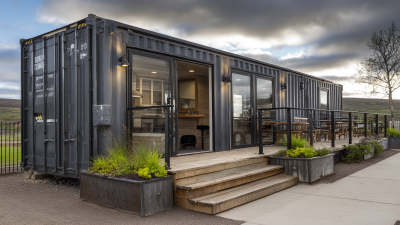
Top 2025 Container Room Designs: Innovative Spaces for Modern Living

The evolution of container rooms has revolutionized the concept of modern living, transforming surplus shipping containers into stylish, sustainable spaces. As urban density intensifies and housing affordability presents pressing challenges, container rooms emerge as a viable solution, providing functional and innovative design options. According to the World Economic Forum, the global housing crisis necessitates creative approaches, with container homes offering rapid construction and reduced costs—typically 30% less than traditional homes.

Moreover, the versatility of container room designs allows for a variety of applications, from compact living units to expansive co-housing projects. A report by the Global Construction Market indicates that the modular construction market, which includes container-based designs, is projected to reach USD 157 billion by 2023, reflecting a growing acceptance and demand for these unique living solutions. With an emphasis on sustainability, many innovative container room designs incorporate eco-friendly practices, such as rainwater harvesting systems and solar power integration, aligning with the increasing consumer preference for environmentally responsible options.

In navigating the complexities of contemporary living, container rooms stand out not only for their affordability and efficiency but also for their ability to adapt to diverse lifestyles and urban contexts, making them a leading choice for future housing solutions.
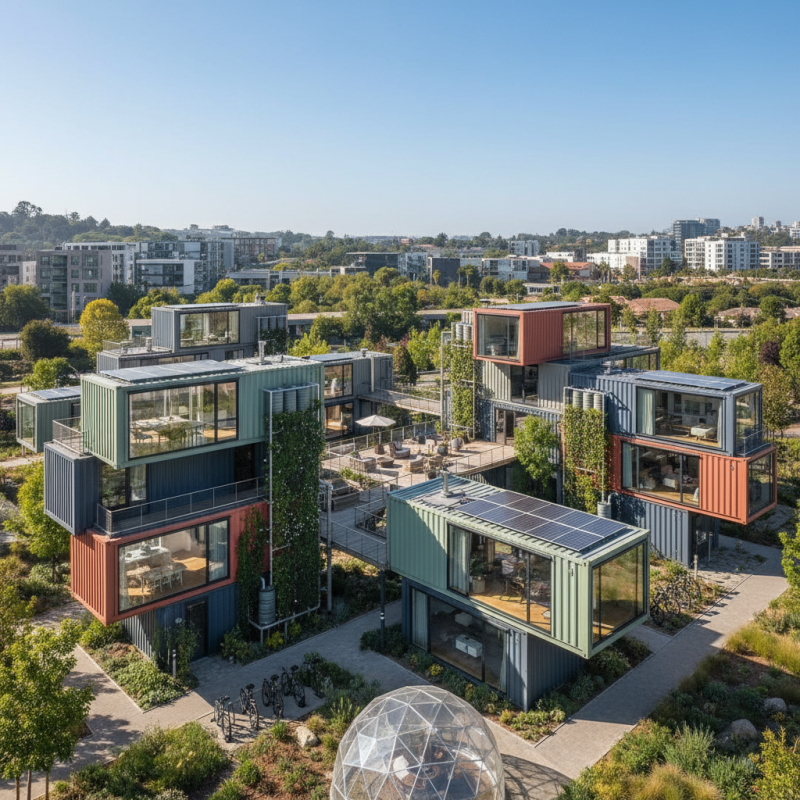
Top 2025 Container Room Designs: Innovative Spaces for Modern Living

Innovative Concepts in Container Room Design for Modern Living
Top 2025 Container Room Designs: Innovative Spaces for Modern Living

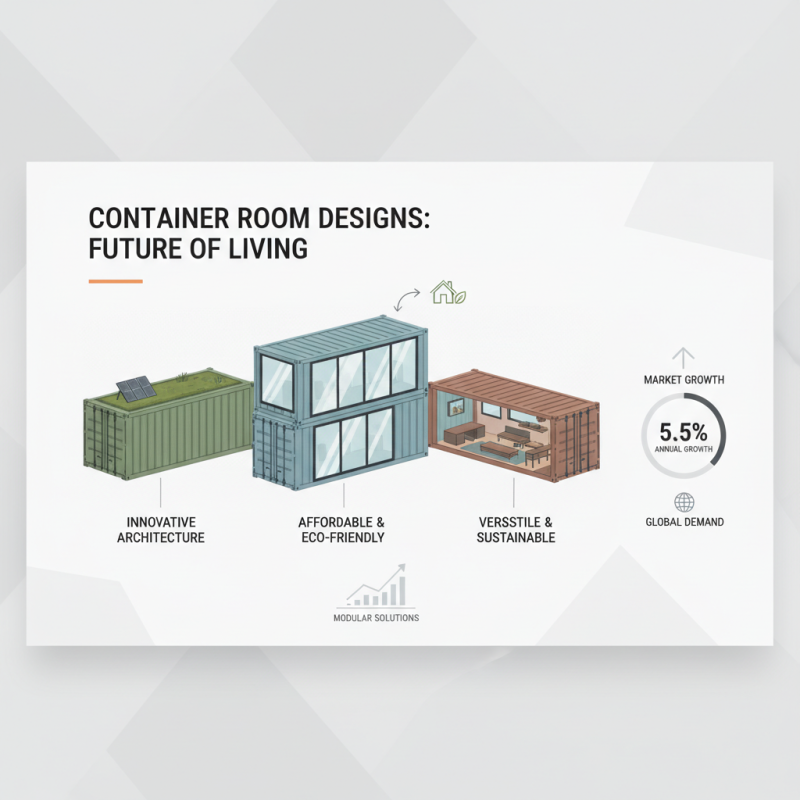
In recent years, container room designs have emerged as a unique and innovative solution for modern living, leveraging the versatility and sustainability of shipping containers. According to the Global Container Homes Market Report, the industry is projected to grow by 5.5% annually, reflecting the increasing demand for affordable and eco-friendly housing solutions. Designers and architects are innovating beyond traditional layouts, creating multifunctional spaces that maximize both utility and aesthetics. Features like cantilevered designs, green roofs, and modular arrangements not only enhance the visual appeal but also improve energy efficiency and sustainability.

Moreover, the trend towards minimalism and urban living has propelled container homes into the spotlight. A report by the International Institute of Container Architecture indicates that these structures can significantly reduce living costs, with savings up to 60% compared to conventional housing. This affordability doesn’t compromise quality; on the contrary, container designs are increasingly incorporating high-end finishes and smart technology. Innovations such as recycled materials for interior design, integrated solar panels for energy generation, and rainwater harvesting systems are setting new standards in modern living. As urban areas continue to face space constraints, container room designs are becoming a viable alternative, providing stylish, practical, and responsive living solutions.
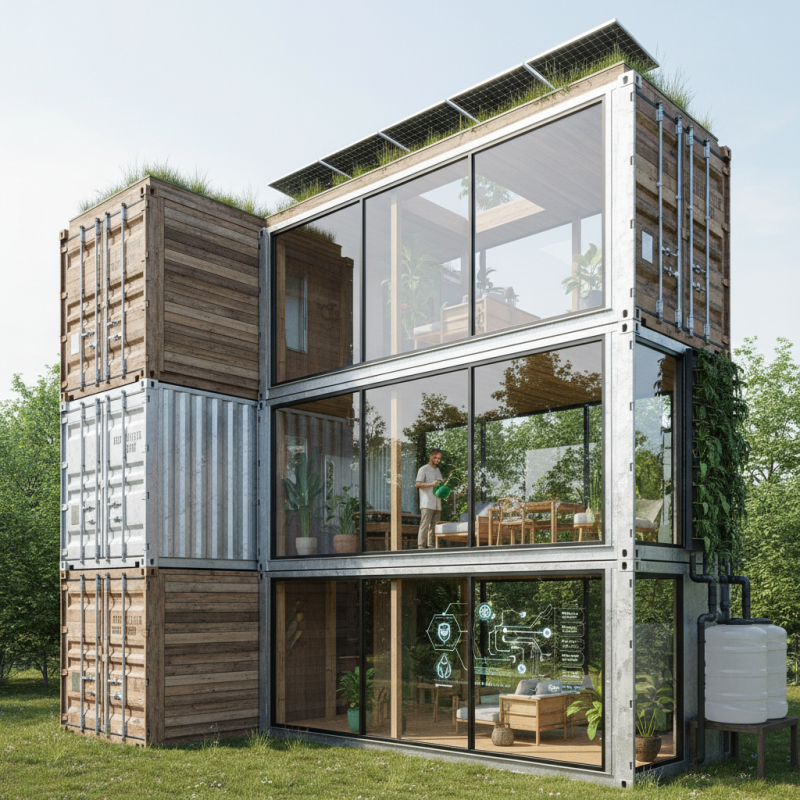
Key Features of Top Container Room Designs in 2025

Top 2025 Container Room Designs: Innovative Spaces for Modern Living

The container room designs of 2025 emphasize sustainability and versatility, showcasing innovative solutions tailored for modern living. One of the key features of these designs is the integration of eco-friendly materials and technologies. Architects and designers are increasingly utilizing recycled materials and energy-efficient systems, such as solar panels and rainwater harvesting, to minimize the environmental impact of these structures. This shift not only enhances the functionality of the living spaces but also promotes a lifestyle that prioritizes sustainability.

Another significant aspect of top container room designs in 2025 is the emphasis on creating adaptable living environments. These designs often incorporate modular elements that allow residents to customize their space according to their needs. For example, retractable walls, multifunctional furniture, and smart home technology enable homeowners to easily transform their container rooms for various purposes, from home offices to recreational areas. This flexibility is particularly appealing in urban settings where space is at a premium, allowing individuals to maximize their living experience without compromising on style or comfort.

Sustainable Materials and Eco-friendly Practices in Container Construction

The trend of using shipping containers as living spaces is gaining momentum, largely fueled by a growing emphasis on sustainability and eco-friendly practices in construction. According to a recent report by the U.S. Green Building Council, buildings that incorporate sustainable materials and methods can reduce energy consumption by 30% to 50% compared to traditional construction. Container homes, made primarily from repurposed steel, not only minimize the use of new materials but also contribute to lowering carbon footprints. By transforming shipping containers into living spaces, developers are not just offering innovative housing solutions but also promoting a circular economy.

Furthermore, the environmental impact of container construction can be significantly lessened through the adoption of eco-friendly practices. For instance, designing container homes that utilize natural light and ventilation strategies can enhance energy efficiency, making it possible to achieve net-zero energy consumption. A report from the World Green Building Council highlights that well-designed green buildings can capture and reuse rainwater and incorporate solar energy systems, making container homes viable options for self-sufficient living. As the industry progresses, the integration of sustainable materials such as recycled insulation and eco-friendly finishes will continue to redefine what modern living spaces can look like, allowing for flexibility without compromising our planet's health.

Top 2025 Container Room Designs: Material Usage and Sustainability

Maximizing Space: Functional Layouts for Container Living Environments

Container living has emerged as a compelling solution for modern housing challenges, particularly in urban settings where space is at a premium. According to the Container Housing Market Report by Fortune Business Insights, the market is projected to reach $73.83 billion by 2025, driven by a growing demand for alternative living spaces. With rising housing costs and environmental concerns, innovative container room designs are stepping in to maximize space and improve functionality.


One design trend focuses on multifunctional layouts that cleverly integrate living, working, and leisure areas. By utilizing furniture that serves multiple purposes, such as foldable tables and convertible sofas, these spaces optimize available square footage. The National Association of Realtors indicates that small homes—those under 1,400 square feet—are increasingly popular, with 38% of home buyers considering them for their affordability and low maintenance. This shift towards minimalism extends to container homes that often employ open-plan designs, facilitating a fluid transition between spaces and enhancing the overall living experience.


Furthermore, effective storage solutions play a pivotal role in container living. Research from HomeAdvisor suggests that 30% of people living in smaller homes struggle with organization, making smart storage an essential component of design. Built-in shelves, under-bed drawers, and vertical storage options not only maximize space but also maintain a clean and uncluttered look, which is crucial in small living environments. Embracing these innovative design strategies enables homeowners to create functional and comfortable spaces tailored to their lifestyles, even within the constraints of a container.

Trends in Aesthetic Design: Color, Texture, and Personalization in Container Rooms

Container rooms are redefining modern living by integrating innovative design elements that focus on aesthetic appeal, functionality, and personalization. In 2025, trends in color and texture will dominate the landscape of container room designs, enabling inhabitants to create unique spaces that reflect their own styles. Earthy tones like taupe and sage green are on the rise, providing a calming backdrop that encourages relaxation. Meanwhile, the incorporation of bold accent colors can provide vibrancy and energy, allowing residents to express their personality through strategic pops of hue.

Texture plays a vital role in enhancing the emotional comfort of container spaces. Materials such as reclaimed wood, industrial metals, and eco-friendly textiles can create a layered effect that adds depth and warmth to the otherwise minimalistic structure. When designing your container room, consider mixing various textures to achieve a cozy yet modern aesthetic.

**Tips:** To create an inviting atmosphere, choose furnishings that are both stylish and comfortable, and don’t shy away from mixing vintage pieces with modern designs. Additionally, personalizing your space with art, plants, and handcrafted decor can help amplify your individual style while making the space truly your own. Embrace the chance to transform a container into a comfortable haven that speaks to who you are.

Top 2025 Container Room Designs: Innovative Spaces for Modern Living

Design Feature Description Color Palette Texture Personalization Options
Sustainable Materials Use of recycled and eco-friendly materials for construction. Earth tones: Greens, Browns Natural textures: Wood, Bamboo Custom finishes and fittings.
Modular Design Flexible layouts for various uses and spaces. Soft neutrals: Beige, Gray Smooth modern surfaces: Steel, Glass Reconfigurable furniture.
Indoor-Outdoor Flow Designs that integrate outdoor spaces with indoor living. Bright colors: Sky Blue, Sunshine Yellow Textured walls: Stone, Stucco Biophilic design elements.
Smart Technology Integration Incorporation of smart home systems. Cool tech colors: White, Silver Polished surfaces: Aluminum, Acrylic Customization through apps.
Minimalist Aesthetic Focus on simplicity and functionality. Monochromatic schemes: Black, White Simple textures: Matte, Flat Personal item displays.

Contact Us